
Thematic Articles

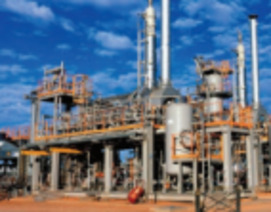
CO2 Capture and Transport

International interest in CO2 capture and storage (CCS), as a method of reducing carbon dioxide emissions linked to global climate change, has been growing in recent years. CCS is particularly attractive for large industrial facilities, especially electric power plants, which contribute a large share of global CO2 emissions from combustion of coal and other fossil fuels. This paper describes the current status of technologies to capture CO2 and transport it to a storage site. The performance and cost of capture technologies are discussed, along with related environmental issues and the outlook for improved, lowercost strategies. The key need now is financing of full-scale demonstrations of CCS at the various types of large coal-based power plants.

This content is for Registered members only. To subscribe, please
join one of our participating societies or contact the Editorial Team.

Login
Already a member? Log in here

CO2 Capture and Transport Read More »

Carbon Dioxide Sequestration A Solution to a Global Problem

Human and industrial development over the past hundred years has led to a huge increase in fossil fuel consumption and CO2 emissions, causing a dramatic increase in atmospheric CO2 concentration. This increased CO2 is believed to be responsible for a significant rise in global temperature over the past several decades. Global-scale climate modeling suggests that the temperature increase will continue, at least over the next few hundred years, leading to glacial melting and rising sea levels. Increased atmospheric CO2 also leads to ocean acidification, which will have drastic consequences for marine ecosystems. In an attempt to solve these problems, many have proposed the large-scale sequestration of CO2 from our atmosphere. This introductory article presents a summary of some of the evidence linking increasing atmospheric CO2 concentration to global warming and ocean acidification and our efforts to stem this rise though CO2 sequestration.

This content is for Registered members only. To subscribe, please
join one of our participating societies or contact the Editorial Team.

Login
Already a member? Log in here

Carbon Dioxide Sequestration A Solution to a Global Problem Read More »

Environmental Relevance of the Platinum-Group Elements

Platinum-group elements (PGE) are used in an increasing number of applications, and emissions are resulting in elevated environmental concentrations of these normally rare metals. Automobile exhaust catalysts, which use Pd, Pt, and Rh as active components, are the main source of PGE emitted into urban and roadside environments, and they contribute to a global increase in PGE concentrations. Emitted PGE are found in urban air and accumulate on the road surface and in roadside soil. Transport of PGE via stormwater is resulting in contamination of aquatic environments. There is now mounting evidence that a fraction of PGE in the environment is bioavailable, and potential uptake into the biosphere is raising concern over potential risks for humans and the environment.

This content is for Registered members only. To subscribe, please
join one of our participating societies or contact the Editorial Team.

Login
Already a member? Log in here

Environmental Relevance of the Platinum-Group Elements Read More »

Ore Deposits of the Platinum-Group Elements

The formation of ore deposits of the platinum-group elements (PGE) requires that their concentrations be raised about four orders of magnitude above typical continental crustal abundances. Such extreme enrichment relies principally on the extraction capacity of sulfide liquid, which sequesters the PGE from silicate magmas. Specific aspects of PGE ore formation are still highly controversial, however, including the role of hydrothermal fluids. The majority of the world’s PGE reserves are held in a handful of deposits, most of which occur within the unique Bushveld Complex of South Africa.

This content is for Registered members only. To subscribe, please
join one of our participating societies or contact the Editorial Team.

Login
Already a member? Log in here

Ore Deposits of the Platinum-Group Elements Read More »

Platinum-Group Elements: A New Set of Key Tracers for the Earth’s Interior

Due to their “iron-loving” properties, platinum-group elements (PGE) are expected to be stored in the Earth’s core. Although very low, at a few parts per billion, PGE concentrations measured in mantle-derived rocks are too high to be in chemical equilibrium with the core. The “late veneer” model offers the best explanation for this paradox—it postulates that a flux of primitive meteorites hit the early Earth after core formation had ceased. However, the inferred PGE composition of the hypothetical primitive mantle exhibits slight positive excesses of Ru, Rh, and Pd compared to the canonical chondritic signature. Such deviations have triggered considerable debate about the composition of the late veneer and the extent of reworking of PGE signatures by igneous processes within the Earth’s mantle.

This content is for Registered members only. To subscribe, please
join one of our participating societies or contact the Editorial Team.

Login
Already a member? Log in here

Platinum-Group Elements: A New Set of Key Tracers for the Earth’s Interior Read More »

Applications of PGE Radioisotope Systems in Geo- and Cosmochemistry

The platinum-group elements contain three radioisotope systems that have been used in many and varied ways in geo- and cosmochemistry. Unique chronological applications include dating the formation of such diverse materials as sulfides, gold, organic-rich sediments, iron meteorites, and sulfide inclusions in diamonds. These systems also serve as isotope tracers for processes such as continental erosion, the deposition of extraterrestrial materials on Earth’s surface, crust–mantle differentiation, recycling of subducted crust into the mantle, core–mantle exchange, and volatile-element depletion of planets and planetesimals. Although these systems have been in use for only a short time, the discoveries they have provided bode well for their incorporation as staples in the geochemical toolbox.

This content is for Registered members only. To subscribe, please
join one of our participating societies or contact the Editorial Team.

Login
Already a member? Log in here

Applications of PGE Radioisotope Systems in Geo- and Cosmochemistry Read More »

Platinum-Group Elements in Cosmochemistry

In a cooling solar nebula, five of the six platinum-group elements (PGE) condense as refractory-metal alloys at temperatures above the condensation of Fe–Ni metal. Non-refractory Pd condenses in solid solution with Fe–Ni. Such refractory alloys are preserved in some meteorites, although they are often highly altered. The high resistance of PGE to oxidation leads to efficient extraction with metallic Fe–Ni during metal segregation and core formation. Experimentally determined PGE metal–silicate partition coefficients predict lower contents of PGE in planetary silicates than are found, supporting a late addition of PGE components. PGE are particularly useful as tracers of impacting extraplanetary materials in the strongly PGE-depleted crusts of the Earth and other planets.

This content is for Registered members only. To subscribe, please
join one of our participating societies or contact the Editorial Team.

Login
Already a member? Log in here

Platinum-Group Elements in Cosmochemistry Read More »

The Platinum-Group Elements: “Admirably Adapted” for Science and Industry

The platinum-group elements (PGE) tend to exist in the metallic state or bond with sulfur or other Group Va and VIa ligands, and often occur as trace accessory minerals in rocks. Combined with three isotopic systems that contain the PGE, these elements afford a unique view of early solar system evolution, planet formation and differentiation, and biogeochemical cycling. Initial purification of the PGE was accomplished in the late 1700s, at which time their unique properties, including high melting point, chemical inertness, and ability to catalyze chemical reactions, became apparent. This led to enormous industrial demand, most notably for fuel production and engine emission control, which combined with scarcity in crustal rocks, has made the PGE a highly valued commodity.

This content is for Registered members only. To subscribe, please
join one of our participating societies or contact the Editorial Team.

Login
Already a member? Log in here

The Platinum-Group Elements: “Admirably Adapted” for Science and Industry Read More »

Galaxy of Green

Olivine occurs across the galaxy, from Earth to extraterrestrial bodies including the Moon, Mars, and asteroids, to particles of comet dust and distant debris disks. The mineral is critical to our understanding of early Solar System chronology, planetary formation processes (e.g., magma ocean solidification), crustal evolution (e.g., volcanic eruptions), and surface weathering. Olivine’s ability to shed light on these processes lies in the linkage of small, physical samples and satellite-derived data. Laboratory spectra become the basis for olivine detection and compositional interpretation in remotely sensed spectra ranging from high-resolution planetary maps to single extra-solar datapoints. In turn, petrologic studies of olivine underpin the geologic interpretations of these spectral datasets. Finally, olivine chemistry records Solar System formation conditions and relative chronology. Olivine is our bridge across time and space.

This content is for Registered members only. To subscribe, please
join one of our participating societies or contact the Editorial Team.

Login
Already a member? Log in here

Galaxy of Green Read More »

Olivine—The Alteration Rock Star

Olivine is the main component of the Earth’s upper mantle, on which our tectonic plates rest. As such, olivine has been studied since the dawn of geology and is regarded as the storyteller of the Earth’s interior. Its physical and chemical properties provide insight into its creation in magmas and its voyage through the upper mantle. However, when olivine is exposed to aqueous fluids, it adopts a more rebellious, rock star–like disposition. Here, we show that the discord, or disequilibrium, between olivine, its reaction products, and fluids containing water and carbon dioxide is so significant that it has been instrumental in changing the Earth throughout the planet’s history and will continue to do so well into the future.

This content is for Registered members only. To subscribe, please
join one of our participating societies or contact the Editorial Team.

Login
Already a member? Log in here

Olivine—The Alteration Rock Star Read More »

Scroll to Top

December 2025 --The Variscan Orogeny in Europe – Understanding Supercontinent Formation

The Variscan orogen formed between 380 and 300 million years ago through several accretionary and collisional cycles, culminating with the construction of the Pangea supercontinent. This process occurred via sequential opening and closure of oceanic basins, synchronous detachment of Gondwana derived continental ribbons, and their outboard amalgamation onto the Laurussia margin. The Variscan orogen is rather unique compared with other orogenic belts on Earth: its overthickened and dominantly magmatic crust in the central belt, surprisingly minor mantle involvement in the magmatic and geodynamic processes, coherent and pulsed magmatism along the collision suture, and its complex accretionary history. Because its final product, Pangea, is the youngest and best-understood supercontinent on Earth, the Variscan orogeny offers clues for understanding the mechanisms of supercontinent formation.