Thematic Articles

Fluids, Faulting, and Flow

Geological fluids affect deformation of rocks both physically and chemically. The presence of fluids can lead to faulting (earthquakes) or enhance flow, depending on the level of stress. At higher stresses, fluids with a density less than their host generate Mode I microcracks, whereas fluids with a density greater than their host generate Mode I microanticracks; both can self-organize and cause faulting. At lower stresses, fluids segregate to grain boundaries at small strains and, at large strains, fluid-enriched zones develop that experience a higher strain rate than the bulk. Dissolved H2O enhances flow (e.g., by water-weakening). Consequences include earthquakes, differentiation, melt separation/volcanism, and seismic anisotropy.

This content is for Registered members only. To subscribe, please
join one of our participating societies or contact the Editorial Team.

Login
Already a member? Log in here

Fluids, Faulting, and Flow Read More »

Water in the Mantle

Subducting slabs transport water stored in hydrous minerals into the transition zone and lower mantle. The water storage capacity of the upper and lower mantles is less than 0.2 wt%. The transition zone has a storage capacity of approximately 0.5–1 wt% due to a water solubility of about 1–3 wt% in wadsleyite and ringwoodite, which are the major con- stituents of the transition zone. Thus, the transition zone may be a major water reservoir in the Earth’s interior. Recent geophysical observations suggest the existence of the hydrated transition zone beneath subduction zones. Water or hydrogen may be transported as far as the bottom of the lower mantle by reacting with metallic iron in the lower mantle to form hydrous phases or iron hydride.

This content is for Registered members only. To subscribe, please
join one of our participating societies or contact the Editorial Team.

Login
Already a member? Log in here

Water in the Mantle Read More »

Volatiles in Magmatic-Volcanic Systems

The abundance and flux of volatiles are important to the hazards associated with explosive volcanic eruptions. Volatiles in magmas can be determined from investigations of melt and fluid inclusions in combination with volatile solubility data. A comparison of the newly deter- mined solubilities of H 2O, SO2, and Cl in a molten Vesuvius phonolite with the compositions of Mt. Somma-Vesuvius melt and fluid inclusions further elucidates degassing and eruptive processes for this volcano.

This content is for Registered members only. To subscribe, please
join one of our participating societies or contact the Editorial Team.

Login
Already a member? Log in here

Volatiles in Magmatic-Volcanic Systems Read More »

Ore-Forming Fluids

Ore-forming (hydrothermal) fluids, consisting largely of H 2O, CO2, and NaCl, formed most of Earth’s ore deposits. The fluids exist as largely unconfined systems in meteoric, seawater, and basinal settings, or locally and intermittently confined systems in magmatic, metamorphic, and basinal settings, and they are driven largely by differences in temperature, elevation or density. Temperatures are highest (~600°C) in magmatic and lowest in basinal and meteoric (~100°C) systems. Salinities well above that of seawater are reached by boiling, evaporation, and evaporite dissolution, largely in magmatic and basinal systems. Today, research is focused on establishing the concentrations of metals in these fluids, the volume and duration of hydrothermal flow, and the links between ore systems and larger, regional fluid systems.

This content is for Registered members only. To subscribe, please
join one of our participating societies or contact the Editorial Team.

Login
Already a member? Log in here

Ore-Forming Fluids Read More »

Fluids in Planetary Systems

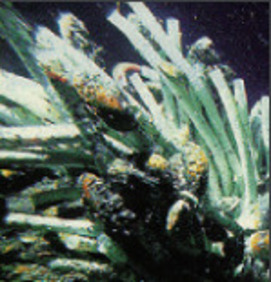
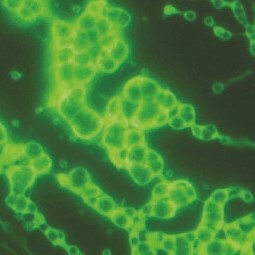
At our first inaugural meeting last April, we sifted through several pages of potential topics. Some had been suggested by the councils of the par- ticipating societies; others had been gathered at meetings, while talking to colleagues. We strived to choose topics that would be of interest to a wide part of our membership – in each of these issues, mineralogists, geochemists, and petrologists should find at least one article of great interest to them – but also topics where exciting developments are underway. We also needed to find guest editors and authors willing to work under very tight deadlines. It you are interested in proposing a topic, you can download a propos- al form from our web site. We are already developing themes for 2006 and 2007. Here is what you can look forward to in 2005.

This content is for Registered members only. To subscribe, please
join one of our participating societies or contact the Editorial Team.

Login
Already a member? Log in here

Fluids in Planetary Systems Read More »

The Role of Reducing Conditions in Building Mercury

Extremely reducing conditions, such as those that prevailed during the accretion and differentiation of Mercury, change the “normal” pattern of behaviour of many chemical elements. Lithophile elements can become chalcophile, siderophile elements can become lithophile, and volatile elements can become refractory. In this context, unexpected elements, such as Si, are extracted to the core, while others (S, C) concentrate in the silicate portion of the planet, eventually leading to an exotic surface mineralogy. In this article, experimental, theoretical and cosmochemical arguments are applied to the understanding of how reducing conditions influenced Mercury, from the nature of its building blocks to the dynamics of its volcanism.

This content is for Registered members only. To subscribe, please
join one of our participating societies or contact the Editorial Team.

Login
Already a member? Log in here

The Role of Reducing Conditions in Building Mercury Read More »

The Surface Composition of Mercury

Geochemical data from MESSENGER have revealed details of Mercury’s surface composition, showing that it differs from the other rocky planets in the inner solar system. For example, the planet’s surface is enriched in S and C, and depleted in Fe, indicating that Mercury formed under much more reducing conditions than other planets. The surface is also enriched in Mg and depleted in Al and Ca. Observed elemental heterogeneities and percent levels of graphite suggest that Mercury underwent a magma ocean phase early in its history. These findings have important implications for understanding Mercury’s origin and evolution.

This content is for Registered members only. To subscribe, please
join one of our participating societies or contact the Editorial Team.

Login
Already a member? Log in here

The Surface Composition of Mercury Read More »

Volcanism on Mercury

Mercury’s volcanic nature has been revealed by NASA’s MESSENGER mission. We now know that all, or most, of the surface has, at some point, been flooded by lavas, sometimes in extremely voluminous eruptions. The ages of Mercury’s lava surfaces reveal that large-volume effusive volcanism ceased about 3.5 billion years ago due to planetary cooling. Mercury’s crust then went into a state of global contraction, thereby impeding further magma ascent. However, some smaller-scale volcanism continued at zones of crustal weakness, particularly at impact craters. Much of this later volcanism has been violently explosive, with volatile gases potentially helping the magma rise and ripping it apart when released to the vacuum at the surface.

This content is for Registered members only. To subscribe, please
join one of our participating societies or contact the Editorial Team.

Login
Already a member? Log in here

Volcanism on Mercury Read More »

Mercury: Inside the Iron Planet

NASA’s MESSENGER spacecraft orbited Mercury from 2011 to 2015 and has provided new insights into the interior of the innermost planet. Mercury has a large metallic core ~2,000 km in radius covered by a thin layer of rock only ~420 km thick. Furthermore, a surprisingly large fraction of this outer layer was produced by melting of deeper rocks, forming a light crust ~35 km thick. The core is now known to produce a magnetic field that has intriguing similarities and differences compared to Earth’s field. Some rocks near the surface are magnetized, and the strongest magnetizations are likely to be >3.5 billion years old. This new understanding of Mercury’s interior is helping reveal how rocky planets operate.

This content is for Registered members only. To subscribe, please
join one of our participating societies or contact the Editorial Team.

Login
Already a member? Log in here

Mercury: Inside the Iron Planet Read More »

The Exploration of Mercury by Spacecraft

The planet Mercury is sufficiently close to the Sun to pose a major challenge to spacecraft exploration. The Mariner 10 spacecraft flew by Mercury three times in 1974–1975 but viewed less than half of the surface. With the three flybys of Mercury by the MESSENGER spacecraft in 2008–2009 and the insertion of that probe into orbit about Mercury in 2011, our understanding of the innermost planet substantially improved. In its four years of orbital operations, MESSENGER revealed a world more geologically complex and compositionally distinctive, with a more dynamic magnetosphere and more diverse exosphere–surface interactions, than expected. With the launch of the BepiColombo dual-orbiter mission, the scientific understanding of the innermost planet has moved another major step forward.

This content is for Registered members only. To subscribe, please
join one of our participating societies or contact the Editorial Team.

Login
Already a member? Log in here

The Exploration of Mercury by Spacecraft Read More »

Scroll to Top

December 2025 --The Variscan Orogeny in Europe – Understanding Supercontinent Formation

The Variscan orogen formed between 380 and 300 million years ago through several accretionary and collisional cycles, culminating with the construction of the Pangea supercontinent. This process occurred via sequential opening and closure of oceanic basins, synchronous detachment of Gondwana derived continental ribbons, and their outboard amalgamation onto the Laurussia margin. The Variscan orogen is rather unique compared with other orogenic belts on Earth: its overthickened and dominantly magmatic crust in the central belt, surprisingly minor mantle involvement in the magmatic and geodynamic processes, coherent and pulsed magmatism along the collision suture, and its complex accretionary history. Because its final product, Pangea, is the youngest and best-understood supercontinent on Earth, the Variscan orogeny offers clues for understanding the mechanisms of supercontinent formation.