
Thematic Articles

Kimberlites from Source to Surface: Insights from Experiments

High-pressure experiments are unconvincing in explaining kimberlites as direct melts of carbonated peridotite because the appropriate minerals do not coexist stably at the kimberlite liquidus. High-pressure melts of peridotite with CO2 and H2O have compositions similar to kimberlites only at pressures where conditions are insufficiently oxidizing to stabilize CO2: they do not replicate the high K2O/Na2O of kimberlites. Kimberlite melts may begin their ascent at ≈300 km depth in reduced conditions as melts rich in MgO and SiO2 and poor in Na2O. These melts interact with modified, oxidized zones at the base of cratons where they gain CO2, CaO, H2O, and K2O and lose SiO2. Decreasing CO2 solubility at low pressures facilitates the incorporation of xenocrystic olivine, resulting in kimberlites’ characteristically high MgO/CaO.

This content is for Registered members only. To subscribe, please
join one of our participating societies or contact the Editorial Team.

Login
Already a member? Log in here

Kimberlites from Source to Surface: Insights from Experiments Read More »

Kimberlites as Geochemical Probes of Earth’s Mantle

Kimberlites are ultrabasic, Si-undersaturated, low Al, low Na rocks rich in CO2 and H2O. The distinctive geochemical character of kimberlite is strongly influenced by the nature of the local underlying lithospheric mantle. Despite this, incompatible trace element ratios and radiogenic isotope characteristics of kimberlites, filtered for the effects of crustal contamination and alteration, closely resemble rocks derived from the deeper, more primitive, convecting mantle. This suggests that the ultimate magma source is sub-lithospheric. Although the composition of primitive kimberlite melt remains unresolved, kimberlites are likely derived from the convecting mantle, with possible source regions ranging from just below the lithosphere, through the transition zone, to the core–mantle boundary.

This content is for Registered members only. To subscribe, please
join one of our participating societies or contact the Editorial Team.

Login
Already a member? Log in here

Kimberlites as Geochemical Probes of Earth’s Mantle Read More »

What is a Kimberlite? Petrology and Mineralogy of Hypabyssal Kimberlites

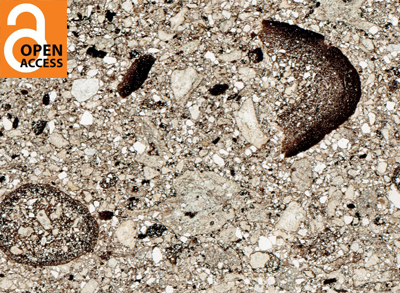
Hypabyssal kimberlites are subvolcanic intrusive rocks crystallised from mantle-derived magmas poor in SiO2 and rich in CO2 and H2O. They are complex, hybrid rocks containing significant amounts of mantle-derived fragments, primarily olivine with rare diamonds, set in a matrix of essentially magmatic origin. Unambiguous identification of kimberlites requires careful petrographic examination combined with mineral compositional analyses. Melt inclusion studies have shown that kimberlite melts contain higher alkali concentrations than previously thought but have not clarified the ultimate origin of these melts. Because of the hybrid nature of kimberlites and their common hydrothermal alteration by fluids of controversial origin (magmatic and/or crustal), the composition of primary kimberlite melts remains unknown.

This content is for Registered members only. To subscribe, please
join one of our participating societies or contact the Editorial Team.

Login
Already a member? Log in here

What is a Kimberlite? Petrology and Mineralogy of Hypabyssal Kimberlites Read More »

Kimberlites: From Deep Earth to Diamond Mines

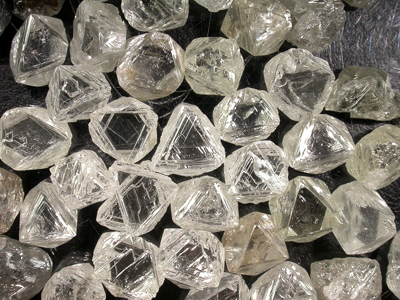
Kimberlites are rare, enigmatic, low-volume igneous rocks. They are highly enriched in magnesium, volatiles (CO2 and H2O) and incompatible trace elements and are thought to be the most deeply derived (>150 km) magmatic rocks on Earth. Kimberlites occur in ancient and thick continental lithosphere, forming intrusive sheets and composite pipes, commonly in clusters. Despite their rarity, kimberlites have attracted considerable attention because they entrain not only abundant mantle fragments but also diamonds, which can provide a uniquely rich picture of the deep Earth. This issue summarises current thinking on kimberlite petrology, geochemistry, and volcanology and outlines the outstanding questions on the genesis of kimberlites and associated diamond mines.

This content is for Registered members only. To subscribe, please
join one of our participating societies or contact the Editorial Team.

Login
Already a member? Log in here

Kimberlites: From Deep Earth to Diamond Mines Read More »

Hydrogen, Hydrocarbons, and Habitability Across the Solar System

The ingredients to make an environment habitable (e.g., liquid water, chemical disequilibria, and organic molecules) are found throughout the solar system. Liquid water has existed transiently on some bodies and persistently as oceans on others. Molecular hydrogen occurs in a plume on Saturn’s moon Enceladus. It can drive the reduction of CO2 to release energy. Methane has been observed in many places: from the dusty plains of Mars, to the great lakes of the Saturnian moon Titan, to the glacial wonderland that is Pluto. Organic molecules are common where volatile elements and reducing conditions prevail: these organic molecules can have diverse origins. Future space missions will attempt to illuminate the “organic solar system” and the role played by possible extraterrestrial life.

This content is for Registered members only. To subscribe, please
join one of our participating societies or contact the Editorial Team.

Login
Already a member? Log in here

Hydrogen, Hydrocarbons, and Habitability Across the Solar System Read More »

Abiotic Hydrogen and Methane: Fuels for Life

Geologically produced (abiotic) molecular hydrogen and methane could be widely utilized by microbial communities in surface and subsurface environments. These microbial communities can, therefore, have a potentially significant impact on the net emissions of H2 and CH4 to Earth’s ocean and atmosphere. Abiotic H2 and CH4 could enable microbial communities to exist in rock-hosted environments and hydrothermal systems with little or no input from photosynthetic carbon fixation, making these communities potential analogs for the earliest metabolisms on Earth (or other planetary bodies). The possible dependence of rock-hosted ecosystems on H2 and CH4 should factor into current and future plans for engineering the subsurface for storage of these compounds as energy fuels.

This content is for Registered members only. To subscribe, please
join one of our participating societies or contact the Editorial Team.

Login
Already a member? Log in here

Abiotic Hydrogen and Methane: Fuels for Life Read More »

The Behavior of H2 in Aqueous Fluids under High Temperature and Pressure

The presence of H2 and H2O in planetary interiors prompts the need for fundamental studies on these compounds under corresponding conditions. Here, we summarize data on H2 properties in aqueous systems under conditions of high temperature and pressure. We explain how to measure important H2 fugacities in hydrothermal systems. We present available experimental data and thermodynamic models for H2 solubility and vapor–liquid partitioning under hydrothermal conditions. In addition, we introduce the fascinating world of H2–H2O clathrate hydrates under extreme temperatures and pressures. The properties of the H2–H2O system are well established below the critical point of water (374 °C and 22.06 MPa), but far less is known under higher temperatures and pressures, or the effect of salt.

This content is for Registered members only. To subscribe, please
join one of our participating societies or contact the Editorial Team.

Login
Already a member? Log in here

The Behavior of H2 in Aqueous Fluids under High Temperature and Pressure Read More »

Abiotic Synthesis of Methane and Organic Compounds in Earth’s Lithosphere

Accumulation of molecular hydrogen in geologic systems can create conditions energetically favorable to transform inorganic carbon into methane and other organic compounds. Although hydrocarbons with a potentially abiotic origin have been proposed to form in a number of crustal settings, the ubiquitous presence of organic compounds derived from biological organic matter presents a challenge for unambiguously identifying abiotic organic molecules. In recent years, extensive analysis of methane and other organics in diverse geologic fluids, combined with novel isotope analyses and laboratory simulations, have, however, yielded insights into the distribution of specific abiotic organic molecules in Earth’s lithosphere and the likely conditions and pathways under which they form.

This content is for Registered members only. To subscribe, please
join one of our participating societies or contact the Editorial Team.

Login
Already a member? Log in here

Abiotic Synthesis of Methane and Organic Compounds in Earth’s Lithosphere Read More »

Abiotic Sources of Molecular Hydrogen on Earth

The capacity for molecular hydrogen (H2) to hydrogenate oxygen and carbon is critical to the origin of life and represents the basis for all known life-forms. Major sources of H2 that strictly involve nonbiological processes and inorganic reactants include (1) the reduction of water during the oxidation of iron in minerals, (2) water splitting due to radioactive decay, (3) degassing of magma at low pressures, and (4) the reaction of water with surface radicals during mechanical breaking of silicate rocks. None of these processes seem to significantly affect the current global atmospheric budget of H2, yet there is substantial H2 cycling in a wide range of Earth’s subsurface environments, with multifaceted implications for microbial ecosystems.

This content is for Registered members only. To subscribe, please
join one of our participating societies or contact the Editorial Team.

Login
Already a member? Log in here

Abiotic Sources of Molecular Hydrogen on Earth Read More »

Hydrogen and Abiotic Hydrocarbons: Molecules that Change the World

Molecular hydrogen (H2), methane, and hydrocarbons with an apparent abiotic origin have been observed in a variety of geologic settings, including serpentinized ultramafic rocks, hydrothermal fluids, and deep fractures within ancient cratons. Molecular hydrogen is also observed in vapor plumes emanating from the icy crust of Saturn’s moon Enceladus, and methane has been detected in the atmosphere of Mars. Geologic production of these compounds has been the subject of increasing scientific attention due to their use by chemosynthetic biological communities. These compounds are also of interest as possible energy resources. This issue summarizes the geological sources of abiotic H2 and hydrocarbons on Earth and elsewhere and examines their impact on microbial life and energy resources.

This content is for Registered members only. To subscribe, please
join one of our participating societies or contact the Editorial Team.

Login
Already a member? Log in here

Hydrogen and Abiotic Hydrocarbons: Molecules that Change the World Read More »

Scroll to Top

December 2025 --The Variscan Orogeny in Europe – Understanding Supercontinent Formation

The Variscan orogen formed between 380 and 300 million years ago through several accretionary and collisional cycles, culminating with the construction of the Pangea supercontinent. This process occurred via sequential opening and closure of oceanic basins, synchronous detachment of Gondwana derived continental ribbons, and their outboard amalgamation onto the Laurussia margin. The Variscan orogen is rather unique compared with other orogenic belts on Earth: its overthickened and dominantly magmatic crust in the central belt, surprisingly minor mantle involvement in the magmatic and geodynamic processes, coherent and pulsed magmatism along the collision suture, and its complex accretionary history. Because its final product, Pangea, is the youngest and best-understood supercontinent on Earth, the Variscan orogeny offers clues for understanding the mechanisms of supercontinent formation.