Thematic Articles

Abiotic Sources of Molecular Hydrogen on Earth

The capacity for molecular hydrogen (H2) to hydrogenate oxygen and carbon is critical to the origin of life and represents the basis for all known life-forms. Major sources of H2 that strictly involve nonbiological processes and inorganic reactants include (1) the reduction of water during the oxidation of iron in minerals, (2) water splitting due to radioactive decay, (3) degassing of magma at low pressures, and (4) the reaction of water with surface radicals during mechanical breaking of silicate rocks. None of these processes seem to significantly affect the current global atmospheric budget of H2, yet there is substantial H2 cycling in a wide range of Earth’s subsurface environments, with multifaceted implications for microbial ecosystems.

This content is for Registered members only. To subscribe, please
join one of our participating societies or contact the Editorial Team.

Login
Already a member? Log in here

Abiotic Sources of Molecular Hydrogen on Earth Read More »
Hydrogen and Abiotic Hydrocarbons: Molecules that Change the World

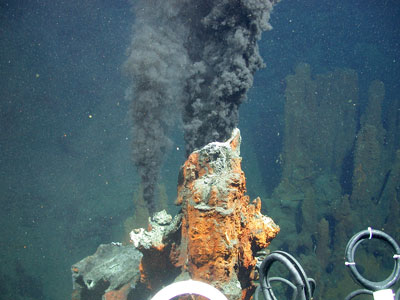
Molecular hydrogen (H2), methane, and hydrocarbons with an apparent abiotic origin have been observed in a variety of geologic settings, including serpentinized ultramafic rocks, hydrothermal fluids, and deep fractures within ancient cratons. Molecular hydrogen is also observed in vapor plumes emanating from the icy crust of Saturn’s moon Enceladus, and methane has been detected in the atmosphere of Mars. Geologic production of these compounds has been the subject of increasing scientific attention due to their use by chemosynthetic biological communities. These compounds are also of interest as possible energy resources. This issue summarizes the geological sources of abiotic H2 and hydrocarbons on Earth and elsewhere and examines their impact on microbial life and energy resources.

This content is for Registered members only. To subscribe, please
join one of our participating societies or contact the Editorial Team.

Login
Already a member? Log in here

Hydrogen and Abiotic Hydrocarbons: Molecules that Change the World Read More »

New Trends in Raman Spectroscopy: From High-Resolution Geochemistry to Planetary Exploration

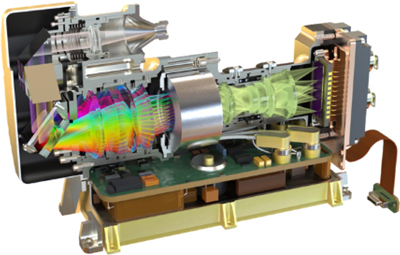
This article reviews nonconventional Raman spectroscopy techniques and discusses present and future applications of these techniques in the Earth and planetary sciences. Time-resolved spectroscopy opens new ways to limit or exploit luminescence effects, whereas techniques based on coherent anti-Stokes Raman scattering (CARS) or surface-enhanced Raman spectroscopy (SERS) allow the Raman signal to be considerably enhanced even down to very high spatial resolutions. In addition, compact portable Raman spectrometers are now routinely used out of the laboratory and are even integrated to two rovers going to Mars in the near future.

This content is for Registered members only. To subscribe, please
join one of our participating societies or contact the Editorial Team.

Login
Already a member? Log in here

New Trends in Raman Spectroscopy: From High-Resolution Geochemistry to Planetary Exploration Read More »

Geoscience Meets Biology: Raman Spectroscopy in Geobiology and Biomineralization

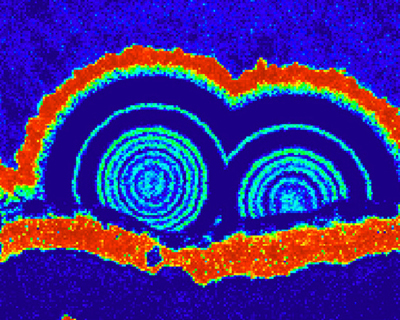
Raman spectroscopy is widely applied in metamorphic petrology and offers many opportunities for geological and tectonic research. Minimal sample preparation preserves sample integrity and microtextural information, while use with confocal microscopes allows spatial resolution down to the micrometer level. Raman spectroscopy clearly distinguishes mineral polymorphs, providing crucial constraints on metamorphic conditions, particularly ultrahigh-pressure conditions. Raman spectroscopy can also be used to monitor the structure of carbonaceous material in metamorphic rocks. Changes in structure are temperature-sensitive, so Raman spectroscopy of carbonaceous material is widely used for thermometry. Raman spectroscopy can also detect and quantify strain in micro-inclusions, offering new barometers that can be applied to understand metamorphic and tectonic processes without any assumptions about chemical equilibrium.

This content is for Registered members only. To subscribe, please
join one of our participating societies or contact the Editorial Team.

Login
Already a member? Log in here

Geoscience Meets Biology: Raman Spectroscopy in Geobiology and Biomineralization Read More »

Applications of Raman Spectroscopy in Metamorphic Petrology and Tectonics

Raman spectroscopy is widely applied in metamorphic petrology and offers many opportunities for geological and tectonic research. Minimal sample preparation preserves sample integrity and microtextural information, while use with confocal microscopes allows spatial resolution down to the micrometer level. Raman spectroscopy clearly distinguishes mineral polymorphs, providing crucial constraints on metamorphic conditions, particularly ultrahigh-pressure conditions. Raman spectroscopy can also be used to monitor the structure of carbonaceous material in metamorphic rocks. Changes in structure are temperature-sensitive, so Raman spectroscopy of carbonaceous material is widely used for thermometry. Raman spectroscopy can also detect and quantify strain in micro-inclusions, offering new barometers that can be applied to understand metamorphic and tectonic processes without any assumptions about chemical equilibrium.

This content is for Registered members only. To subscribe, please
join one of our participating societies or contact the Editorial Team.

Login
Already a member? Log in here

Applications of Raman Spectroscopy in Metamorphic Petrology and Tectonics Read More »

Applications of Raman Spectroscopy in Mineralogy and Geochemistry

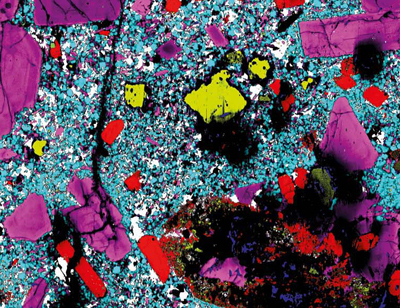
The application of Raman spectroscopy for the identification and characterization of minerals and related materials has increased appreciably during recent years. Raman spectroscopy has proven to be a most valuable and versatile analytical tool. Successful applications cover virtually all the mineralogical sub-disciplines, and have become more numerous in geochemistry. We present a general summary of present applications, illustrated by selected examples. In addition, we briefly point out several aspects of spectral acquisition, data reduction, and interpretation of Raman results that are important for the application of Raman spectroscopy as a reliable analytical tool.

This content is for Registered members only. To subscribe, please
join one of our participating societies or contact the Editorial Team.

Login
Already a member? Log in here

Applications of Raman Spectroscopy in Mineralogy and Geochemistry Read More »

Microscale Chemistry: Raman Analysis of Fluid and Melt Inclusions

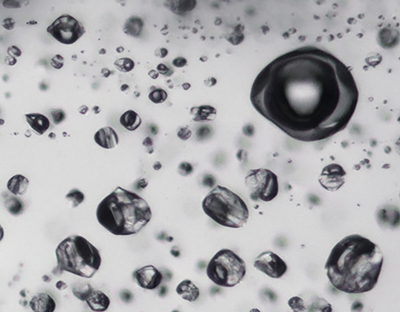
Raman spectroscopy is a commonly applied nondestructive analytical technique for characterizing fluid and melt inclusions. The exceptional spatial resolution (~1 µm) and excellent spectral resolution (≤1 cm−1) permits the characterization of micrometer-scale phases and allows quantitative analyses based on Raman spectral features. Data provided by Raman analysis of fluid and melt inclusions has significantly advanced our understanding of complex geologic processes, including preeruptive volatile contents of magmas, the nature of fluids in the deep crust and upper mantle, the generation and evolution of methane-bearing fluids in unconventional hydrocarbon reservoirs. Anticipated future advances include the development of Raman mass spectroscopy and the use of Raman to monitor reaction progress in synthetic and natural fluid inclusion microreactors.

This content is for Registered members only. To subscribe, please
join one of our participating societies or contact the Editorial Team.

Login
Already a member? Log in here

Microscale Chemistry: Raman Analysis of Fluid and Melt Inclusions Read More »

Welcome to Raman Spectroscopy: Successes, Challenges, and Pitfalls

Geoscientists quickly recognized the broad applicability of Raman microprobe spectroscopy to the Earth and planetary sciences, especially after commercially built microprobe instruments became available in the early 1980s. Raman spectra are sensitive to even minor (chemical or structural) perturbations within chemical bonds in (even amorphous) solids, liquids, and gases and can, thus, help identify, characterize, and differentiate between individual minerals, fluid inclusions, glasses, carbonaceous materials, solid solution phases, strain in minerals, and dissolved species in multi-component solutions. The articles in this issue explore how Raman spectroscopy has deepened and broadened our understanding of geological and extraterrestrial materials and processes.

This content is for Registered members only. To subscribe, please
join one of our participating societies or contact the Editorial Team.

Login
Already a member? Log in here

Welcome to Raman Spectroscopy: Successes, Challenges, and Pitfalls Read More »

Biogeochemical Controls on the Redox Evolution of Earth’s Oceans and Atmosphere

Download Article (PDF) June 2020 Issue Table of Contents The redox state of Earth’s atmosphere has undergone a dramatic shift over geologic time from reducing to strongly oxidizing, and this shift has been coupled with changes in ocean redox structure and the size and activity of Earth’s biosphere. Delineating this evolutionary trajectory remains a major…

This content is for Registered members only. To subscribe, please
join one of our participating societies or contact the Editorial Team.

Login
Already a member? Log in here

Biogeochemical Controls on the Redox Evolution of Earth’s Oceans and Atmosphere Read More »

Electron Transfer Drives Metal Cycling in the Critical Zone

Electron transfer in the critical zone is driven by biotic and abiotic mechanisms and controls the fate of inorganic and organic contaminants, whether redox-sensitive or not. In these environments, Fe- and Mn-bearing minerals, as well as organic matter, are key compounds. They interact with each other and constitute important electron shuttles. As a result, not only their solubility but also their structure controls the mobility of many essential and toxic elements. In addition, microorganisms that form hot spots and are widespread in environmental systems are also primordial players in electron transfer processes by acting as a catalyst between an electron donor and an acceptor, and through their contaminant detoxification metabolism.

This content is for Registered members only. To subscribe, please
join one of our participating societies or contact the Editorial Team.

Login
Already a member? Log in here

Electron Transfer Drives Metal Cycling in the Critical Zone Read More »

Scroll to Top

December 2025 --The Variscan Orogeny in Europe – Understanding Supercontinent Formation

The Variscan orogen formed between 380 and 300 million years ago through several accretionary and collisional cycles, culminating with the construction of the Pangea supercontinent. This process occurred via sequential opening and closure of oceanic basins, synchronous detachment of Gondwana derived continental ribbons, and their outboard amalgamation onto the Laurussia margin. The Variscan orogen is rather unique compared with other orogenic belts on Earth: its overthickened and dominantly magmatic crust in the central belt, surprisingly minor mantle involvement in the magmatic and geodynamic processes, coherent and pulsed magmatism along the collision suture, and its complex accretionary history. Because its final product, Pangea, is the youngest and best-understood supercontinent on Earth, the Variscan orogeny offers clues for understanding the mechanisms of supercontinent formation.