
Thematic Articles

Cave Decorating with Microbes: Geomicrobiology of Caves

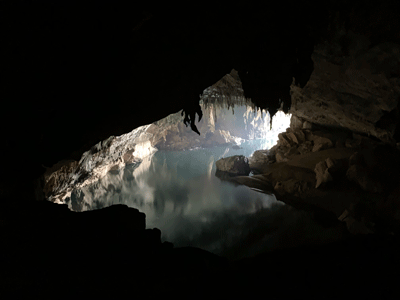
Microorganisms are important for the formation and biogeochemistry of caves. Some caves are energy-rich systems with abundant organic or inorganic chemical energy inputs that support robust microbial ecosystems, but most are extremely oligotrophic settings with slow-growing microbial communities that rely on limited energy resources. Microorganisms are catalysts for element cycling in subterranean environments and act as agents of mineral precipitation and dissolution. Microbes can contribute to cave formation by producing acids and corroding limestone bedrock, and they can form secondary mineral deposits by catalyzing metal oxidation and inducing carbonate precipitation. We describe the energy sources for microbial life in caves, and we review three situations in which microorganisms may play a direct role in mineral deposition and bedrock corrosion.

This content is for Registered members only. To subscribe, please
join one of our participating societies or contact the Editorial Team.

Login
Already a member? Log in here

Cave Decorating with Microbes: Geomicrobiology of Caves Read More »
Temperature Reconstructions Using Speleothems

Methods for reconstructing past temperatures from speleothems have only recently been developed. Advances in quantitative temperature proxies for speleothems are now allowing critical knowledge gaps to be filled, given the outstanding age control and wide geographical distribution of the speleothem archive. The methods of reconstructing temperatures from speleothems are diverse: they rely on concepts from geochemistry, biology, and physics, and are based on different aspects of speleothems, including water inclusions, calcite, and organic molecules. Combining the different approaches makes temperature reconstructions more robust, affords further insights into the methodologies, and provides constraints on other climate variables.

This content is for Registered members only. To subscribe, please
join one of our participating societies or contact the Editorial Team.

Login
Already a member? Log in here

Temperature Reconstructions Using Speleothems Read More »

Tales from the Underground: Speleothem Records of Past Hydroclimate

Geochemical records from speleothems have significantly advanced our understanding of natural climate variability over the last ~600,000 years. Speleothems are sensitive recorders of past changes in hydroclimate because they can be precisely dated and contain multiple hydrologically sensitive geochemical proxies. Oxygen isotope records from speleothems tell us about the timing and mechanisms of past changes in precipitation amount, temperature, atmospheric circulation, and/or global monsoon intensity. Variations in speleothem carbon isotope ratios or trace element concentrations reflect changes in local water balance, vegetation, and karst hydrology. Speleothem paleoclimate records represent a window into the past that can provide crucial information for understanding how anthropogenic climate change and natural climate variability will impact future water resources on Earth.

This content is for Registered members only. To subscribe, please
join one of our participating societies or contact the Editorial Team.

Login
Already a member? Log in here

Tales from the Underground: Speleothem Records of Past Hydroclimate Read More »

Uranium–Thorium Dating of Speleothems

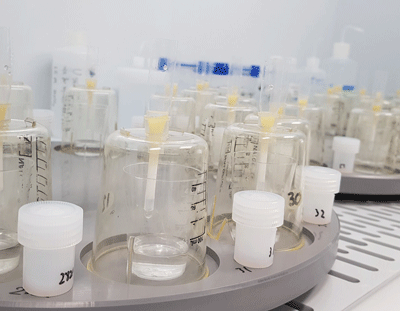
Speleothems are important timekeepers of Earth’s climate history. A key advantage of speleothems is that they can be dated using U–Th techniques. Mass spectrometric methods for measuring U and Th isotopes has led to vast improvements in measurement precision and a dramatic reduction in sample size. As a result, the timing of past climate, environment, and Earth system changes can be investigated at exceptional temporal precision. In this review, we summarize the principles and history of U–Th dating of speleothems. Finally, we highlight three studies that use U–Th dated speleothems to investigate past changes to the Asian monsoon, constrain the timing of sociopolitical change in ancient civilizations, and develop a speleothem-based calibration of the 14C timescale.

This content is for Registered members only. To subscribe, please
join one of our participating societies or contact the Editorial Team.

Login
Already a member? Log in here

Uranium–Thorium Dating of Speleothems Read More »

Cave and Speleothem Science: From Local to Planetary Scales

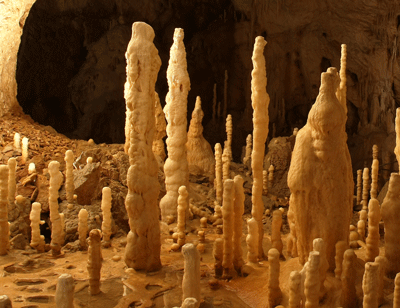
Caves occur everywhere on our planet, from the tropics to the high latitudes and from below sea level to alpine settings. Cave morphologies provide clues to their formation mechanisms, and their iconic mineralogical features—stalagmites and stalactites—carry a wealth of paleoenvironmental information encoded in their geochemistry and mineralogy. Recent work demonstrates a striking improvement in our ability to decode these paleoenvironmental proxies, and dramatic geochronological advances enable higher resolution records that extend further back in geologic time. Cave research addresses an ever-increasing range of geoscience problems, from establishing the timing and mechanisms of climate change to uncovering detailed records of geomagnetic field behavior.

This content is for Registered members only. To subscribe, please
join one of our participating societies or contact the Editorial Team.

Login
Already a member? Log in here

Cave and Speleothem Science: From Local to Planetary Scales Read More »

Imaging with Neutrons

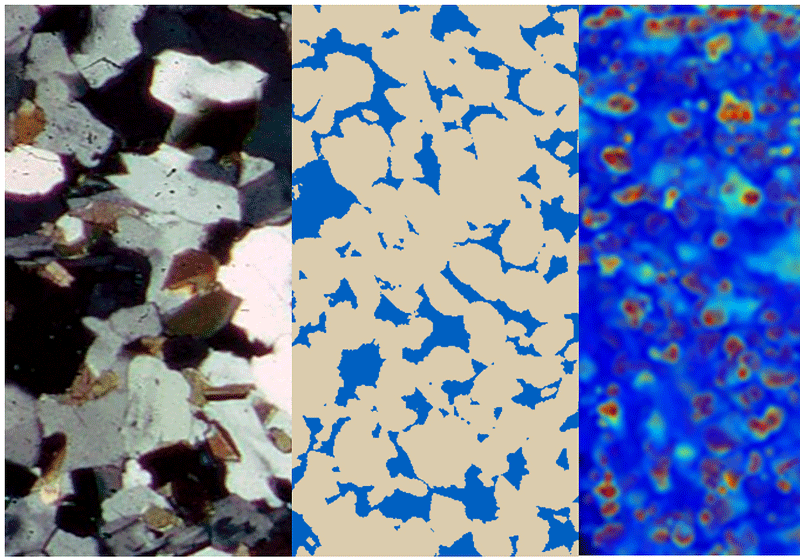
By exploiting the penetration, attenuation, and scattering properties of neutrons, images of matter in two or three dimensions reveal information unobtainable using other probes. Despite the limitation in brilliance of neutron sources, several neutron-based imaging techniques are essential to different aspects of modern geoscience. Typical examples include the evaluation of porosity in rocks and sediments, mapping of light elements in solids, noninvasive probing of cultural heritage objects, investigations of thick engineering components, and the exploration of diffusion and percolation processes of fluids within porous matrices, organo-inorganic composites, and living organisms. Techniques under development include simultaneous neutron and X-ray tomography in heterogeneous media, Bragg-edge imaging, and the possibility of porosimetry from dark-field imaging.

This content is for Registered members only. To subscribe, please
join one of our participating societies or contact the Editorial Team.

Login
Already a member? Log in here

Imaging with Neutrons Read More »

Probing Phase Transitions and Magnetism in Minerals with Neutrons

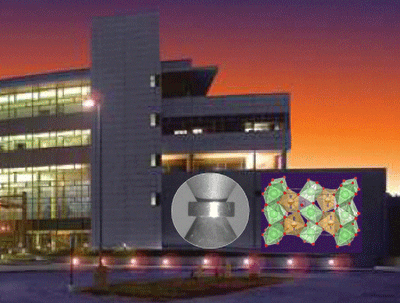
The development of sophisticated sample environments to control temperature, pressure, and magnetic field has grown in parallel with neutron source and instrumentation development. High-pressure apparatus, with high- and low-temperature capability, novel designs for diamond cells, and large volume presses are matched with next-generation neutron sources and moderator designs to provide unprecedented neutron beam brightness. Recent developments in sample environments are expanding the pressure–temperature space accessible to neutron scattering experiments. Researchers are using new capabilities and an increased understanding of the fundamentals of structural and magnetic transitions to explore new territories, including hydrogenous minerals (e.g., ices and hydrates) and magnetic structural phase diagrams.

This content is for Registered members only. To subscribe, please
join one of our participating societies or contact the Editorial Team.

Login
Already a member? Log in here

Probing Phase Transitions and Magnetism in Minerals with Neutrons Read More »

Probing the Structure of Melts, Glasses, and Amorphous Materials

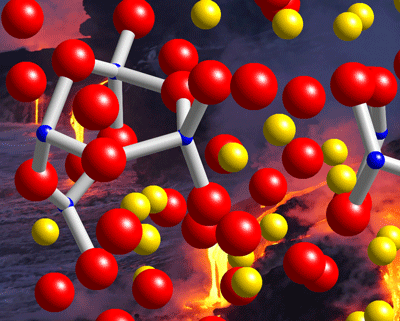
Liquids, glasses, and amorphous materials are ubiquitous in the Earth sciences and are intrinsic to a plethora of geological processes, ranging from volcanic activity, deep Earth melting events, metasomatic processes, frictional melting (pseudotachylites), lighting strikes (fulgurites), impact melting (tektites), hydrothermal activity, aqueous solution geochemistry, and the formation of dense high-pressure structures. However, liquids and glassy materials lack the long-range order that characterizes crystalline materials, and studies of their structure require a different approach to that of conventional crystallography. The pair distribution function is the neutron diffraction technique used to characterize liquid and amorphous states. When combined with atomistic models, neutron diffraction techniques can determine the properties and behavior of disordered structures.

This content is for Registered members only. To subscribe, please
join one of our participating societies or contact the Editorial Team.

Login
Already a member? Log in here

Probing the Structure of Melts, Glasses, and Amorphous Materials Read More »

Nanoscale Structure and Dynamics in Geochemical Systems

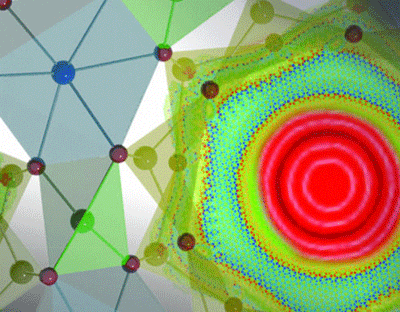
Neutron scattering is a powerful tool to elucidate the structure and dynamics of systems that are important to geochemists, including ion association in complex aqueous solutions, solvent-exchange reactions at mineral–water interfaces, and reaction and transport of fluids in nanoporous materials. This article focusses on three techniques: neutron diffraction, which can reveal the atomic-level structure of aqueous solutions and solids; quasi-elastic neutron scattering, which measures the diffusional dynamics at mineral–water interfaces; and small-angle neutron scattering, which can show how properties of nanoporous systems change during gas, liquid, and solute imbibition and reaction. The usefulness and applicability of the experimental results are extended by rigorous comparison to computational simulations.

This content is for Registered members only. To subscribe, please
join one of our participating societies or contact the Editorial Team.

Login
Already a member? Log in here

Nanoscale Structure and Dynamics in Geochemical Systems Read More »

Where is the Hydrogen?

How is hydrogen distributed among minerals and how is it bonded in their crystal structures? These are important questions, because the amount of hydrogen and the bonding configuration of hydrogen in crystalline materials governs many of that material’s properties: its thermal and compressional behavior, P–T phase stability, rheology, and electrical conductivity. A reliable reconstruction of the Earth’s interior, or the prediction of mineral transformations in complex industrial processes, must account for these parameters. Neutron diffraction can locate hydrogen sites in mineral structures, reveal any static or dynamic hydrogen disorder, help define the libration regime of hydrogen, and elucidate hydrogen-bonding configurations. Thus, that most elusive element for X-ray probes is perfectly detectable using neutrons.

This content is for Registered members only. To subscribe, please
join one of our participating societies or contact the Editorial Team.

Login
Already a member? Log in here

Where is the Hydrogen? Read More »

Scroll to Top

December 2025 --The Variscan Orogeny in Europe – Understanding Supercontinent Formation

The Variscan orogen formed between 380 and 300 million years ago through several accretionary and collisional cycles, culminating with the construction of the Pangea supercontinent. This process occurred via sequential opening and closure of oceanic basins, synchronous detachment of Gondwana derived continental ribbons, and their outboard amalgamation onto the Laurussia margin. The Variscan orogen is rather unique compared with other orogenic belts on Earth: its overthickened and dominantly magmatic crust in the central belt, surprisingly minor mantle involvement in the magmatic and geodynamic processes, coherent and pulsed magmatism along the collision suture, and its complex accretionary history. Because its final product, Pangea, is the youngest and best-understood supercontinent on Earth, the Variscan orogeny offers clues for understanding the mechanisms of supercontinent formation.