Thematic Articles

Geochronology of the Sanbagawa Belt: Younger and Faster than Before

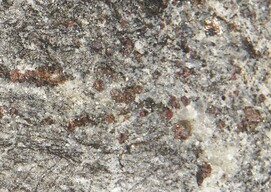
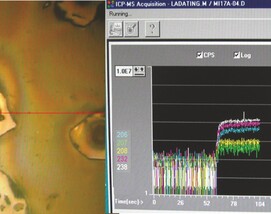
Recent advances in geochronological studies have helped establish the Sanbagawa belt as an important site for studying metamorphism related to subduction. Application of several dating methods yield the following important results. 1) Metamorphism and deformation related to subduction started ~120 Ma and were complete by ~50 Ma. 2) Subduction to eclogite facies, followed by return to the surface, was rapid and occurred within a few million −1 years or less (at ~89 Ma), indicating exhumation rates of at least 1–2 cm•y−1. 3) The age of the slab during the peak eclogite facies metamorphism was ~60 My. These results help redefine the geological history of SW Japan and provide important constraints for mechanical and thermal models of subduction zones in general.

This content is for Registered members only. To subscribe, please
join one of our participating societies or contact the Editorial Team.

Login
Already a member? Log in here

Geochronology of the Sanbagawa Belt: Younger and Faster than Before Read More »

Ultramafic Rocks from the Sanbagawa Belt: Records of Mantle Wedge Processes

Mantle wedge domains beneath the forearc Moho are unique regions of Earth’s interior where mantle encounters subducting oceanic plates. Crystal-plastic deformation and fluid-induced reactions in the supra-subduction mantle control global material circulation, arc volcanism, and seismicity within subduction zones. The Sanbagawa metamorphic belt contains numerous ultramafic blocks in its higher-grade zones, some of which likely originated as lower crustal arc cumulates that were subsequently incorporated into the mantle wedge and transported to the slab–mantle inter- face by mantle flow. Properties of these ultramafic rocks provide a valuable opportunity to understand the dynamic processes of the mantle wedge up to 80 km depth, including mantle flow, hydration/dehydration, and fluid–rock interactions near the slab–mantle interface of a warm subduction zone.

This content is for Registered members only. To subscribe, please
join one of our participating societies or contact the Editorial Team.

Login
Already a member? Log in here

Ultramafic Rocks from the Sanbagawa Belt: Records of Mantle Wedge Processes Read More »

Sanbagawa Subduction: What Went in, How Deep, and How Hot did it Get?

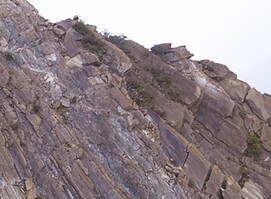
The Sanbagawa belt is a “coherent” oceanic subduction-type metamorphic region representing a rock package predominantly derived from oceanic crust and accreted at depths of 20–80 km (300–700 °C). The thermal structure and lithological layers are complexly deformed but semi- continuous, in contrast to more commonly reported subduction-related domains dominated by mélange. The coeval Shimanto accretionary complex records accretion at depths <15 km and the rocks are primarily terrigenous sediments. The Sanbagawa belt has a greater proportion of mafic rocks than the Shimanto complex, implying progressive peeling-off of oceanic plate stratigraphy with more basaltic oceanic crust slices accreted at deeper levels. Tectonic exhumation can be explained by three separate phases dominated by buoyancy-driven upflow, ductile thinning, and normal faulting.

This content is for Registered members only. To subscribe, please
join one of our participating societies or contact the Editorial Team.

Login
Already a member? Log in here

Sanbagawa Subduction: What Went in, How Deep, and How Hot did it Get? Read More »

Paired Metamorphism of SW Japan and Implications for Tectonics of Convergent Margins

The Sanbagawa-Ryoke pair of geological units in southwest Japan is the classic example of paired metamorphism originally identified by Akiho Miyashiro. Together these belts represent an important study area for developing and testing ideas about how convergent margins behave over geological time based on studies of the rock record including petrology, geochemistry, deformation, and geochronology. The two sides of the pair represent ancient examples of a subduction zone in the Sanbagawa belt and an associated volcanic arc in the Ryoke belt. This issue of Elements brings together the results of a wide range of different approaches summarizing the current state of knowledge about the Sanbagawa-Ryoke pair and how this informs our understanding of convergent margins in general.

This content is for Registered members only. To subscribe, please
join one of our participating societies or contact the Editorial Team.

Login
Already a member? Log in here

Paired Metamorphism of SW Japan and Implications for Tectonics of Convergent Margins Read More »

Analytical Techniques for Identification and Characterization of Extraterrestrial Organic Matter

Advances in analytical techniques are essential for understanding the nature, formation, and evolutionary history of extraterrestrial organic matter. In this chapter, we briefly review analytical techniques used to detect and characterize organic matter in extraterrestrial materials. Mass spectrometry is often coupled with gas chromatography or liquid chromatography for elemental and isotopic analysis, and for identifying specific organic compounds. Spectroscopy involves interaction of molecules with electromagnetic radiation at various wavelengths. Almost every wavelength—from X-rays to radio waves—can be used for spectroscopic measurements. The most major microscopic and nanoscopic techniques are scanning and/or transmission electron microscopy. Spectroscopy and mass spectrometry can also be coupled with microscopic analysis for detailed compositional investigations.

This content is for Registered members only. To subscribe, please
join one of our participating societies or contact the Editorial Team.

Login
Already a member? Log in here

Analytical Techniques for Identification and Characterization of Extraterrestrial Organic Matter Read More »

Asteroidal Organics from the Sample Return Mission Hayabusa2 and their Implication for Understanding our Origins

The C-type asteroid Ryugu samples returned by the Hayabusa2 spacecraft are the chemically most pristine material in the Solar System, as they have not been exposed to terrestrial environments. The organic matter in Ryugu records the molecular evolution from the Sun’s parent molecular cloud chemistry to asteroidal aqueous alteration. In this article, we review the results of Ryugu sample analysis and discuss the evolution of organic matter in the early Solar System by comparing these results with recent radio and infrared observations of protostars and protoplanetary disks.

This content is for Registered members only. To subscribe, please
join one of our participating societies or contact the Editorial Team.

Login
Already a member? Log in here

Asteroidal Organics from the Sample Return Mission Hayabusa2 and their Implication for Understanding our Origins Read More »

Diversity of Complex Organic Matter in Carbonaceous Chondrites, IDPs, and UCAMMs

Complex organic matter is present in many extraterrestrial materials such as chondrite meteorites, micrometeorites, and interplanetary dust. The observed complexity of this organic matter is due to the combination of diversity of primitive organic materials that accreted onto asteroids and the subsequent effect of hydrothermal and/or metamorphic alteration that took place after accretion. These processes resulted in a variety of carbonaceous grain morphologies, elemental abundances, and organic functional group compositions. Some carbonaceous dust grains and micrometeorites have cometary origins and provide insights into the unique processing histories on those outer Solar System bodies. Isotopic analyses can help distinguish carbonaceous grains that retain their pre-accretion heritage, while advanced microscopy techniques reveal the interplay of complex organic matter with surrounding mineral.

This content is for Registered members only. To subscribe, please
join one of our participating societies or contact the Editorial Team.

Login
Already a member? Log in here

Diversity of Complex Organic Matter in Carbonaceous Chondrites, IDPs, and UCAMMs Read More »

Delivery of Organic Matter to the Early Earth

The inner Solar System—including the planet Earth—was heavily bombarded by comets, asteroids, and their fragments (i.e., meteorites, micrometeorites, and interplanetary dust particles) from 4.56 to about 3.5 billion years ago. This bombardment resulted in a rich assortment of organics delivered to the Earth, as comets and many asteroids contain carbonaceous material. These organic compounds were likely further processed on the early Earth (e.g., by impact-shock reactions), providing a feedstock of prebiotic molecules to the crust and oceans. In this chapter, we review the mechanisms of organic matter delivery to the primitive Earth, further reactions and processing, and the importance of exogenous material in the evolution of our planet and life.

This content is for Registered members only. To subscribe, please
join one of our participating societies or contact the Editorial Team.

Login
Already a member? Log in here

Delivery of Organic Matter to the Early Earth Read More »

Formation and Evolution Mechanisms for Organic Matter in Space

Organic compounds are a major component of dust in molecular clouds, alongside silicates and water ice, due to the high abundances of elements that make up these compounds in the Galaxy. The initial molecular inventory of the Solar System, inherited from the molecular cloud, was modified and new complex molecules were formed in the protoplanetary disk and planetesimals. Because astronomical observations mainly target gas, while cosmochemical evidence deals with solid phases, it is crucial to link discrepant knowledge on organic species through state-of-the-art modeling. This chapter reviews the latest understanding of surface reactions on inter- stellar dusts, gas–dust reactions in the protoplanetary disk, and alteration processes on planetesimals in the early Solar System.

This content is for Registered members only. To subscribe, please
join one of our participating societies or contact the Editorial Team.

Login
Already a member? Log in here

Formation and Evolution Mechanisms for Organic Matter in Space Read More »

Extraterrestrial Organic Matter: An Introduction

Extraterrestrial organic matter forms in a variety of locations in space through different mechanisms. Its nature, distribution, formation mechanisms and locations are of particular interest. Some organic molecules can even be considered as key players for the emergence of life. Although new organic species are continuously detected in the interstellar media, Solar System bodies, and extraterrestrial materials, their formation and evolution are still not fully understood. Ground-based and space observations can detect organic matter in different objects with a range of complexity and diversity, while laboratory investigations of astromaterials allow detailed characterization of extraterrestrial organic matter with high precision. This issue reviews different aspects of extraterrestrial organic matter, including its origin, evolution, diversity, and delivery.

This content is for Registered members only. To subscribe, please
join one of our participating societies or contact the Editorial Team.

Login
Already a member? Log in here

Extraterrestrial Organic Matter: An Introduction Read More »

Scroll to Top

December 2025 --The Variscan Orogeny in Europe – Understanding Supercontinent Formation

The Variscan orogen formed between 380 and 300 million years ago through several accretionary and collisional cycles, culminating with the construction of the Pangea supercontinent. This process occurred via sequential opening and closure of oceanic basins, synchronous detachment of Gondwana derived continental ribbons, and their outboard amalgamation onto the Laurussia margin. The Variscan orogen is rather unique compared with other orogenic belts on Earth: its overthickened and dominantly magmatic crust in the central belt, surprisingly minor mantle involvement in the magmatic and geodynamic processes, coherent and pulsed magmatism along the collision suture, and its complex accretionary history. Because its final product, Pangea, is the youngest and best-understood supercontinent on Earth, the Variscan orogeny offers clues for understanding the mechanisms of supercontinent formation.