

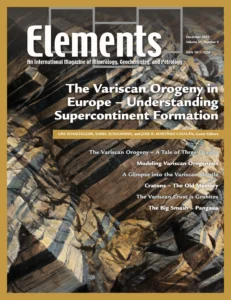
The Variscan Orogeny in Europe – Understanding Supercontinent Formation
Urs Schaltegger, Karel Schulmann, and Jose R. Martínez Catalán– Guest Editors
Table of Contents
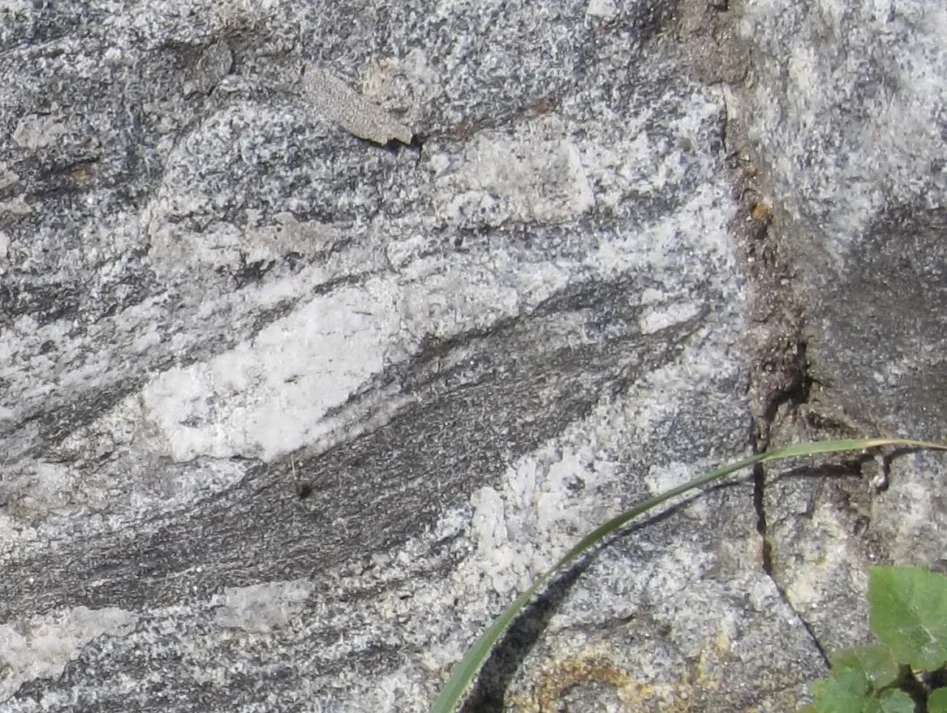
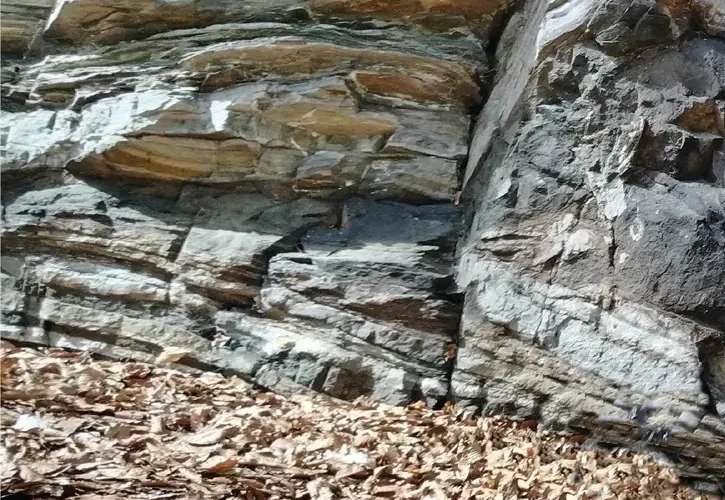
The Variscan orogen formed between 380 and 300 million years ago through several accretionary and collisional cycles, culminating with the construction of the Pangea supercontinent. This process occurred via sequential opening and closure of oceanic basins, synchronous detachment of Gondwana derived continental ribbons, and their outboard amalgamation onto the Laurussia margin. The Variscan orogen is rather unique compared with other orogenic belts on Earth: its overthickened and dominantly magmatic crust in the central belt, surprisingly minor mantle involvement in the magmatic and geodynamic processes, coherent and pulsed magmatism along the collision suture, and its complex accretionary history. Because its final product, Pangea, is the youngest and best-understood supercontinent on Earth, the Variscan orogeny offers clues for understanding the mechanisms of supercontinent formation.
- Variscan Orogeny: A Three Oceans Problem
- Modeling the Variscan Orogeny
- Extent and Role of Cratonic Lithosphere in the Variscan Orogeny
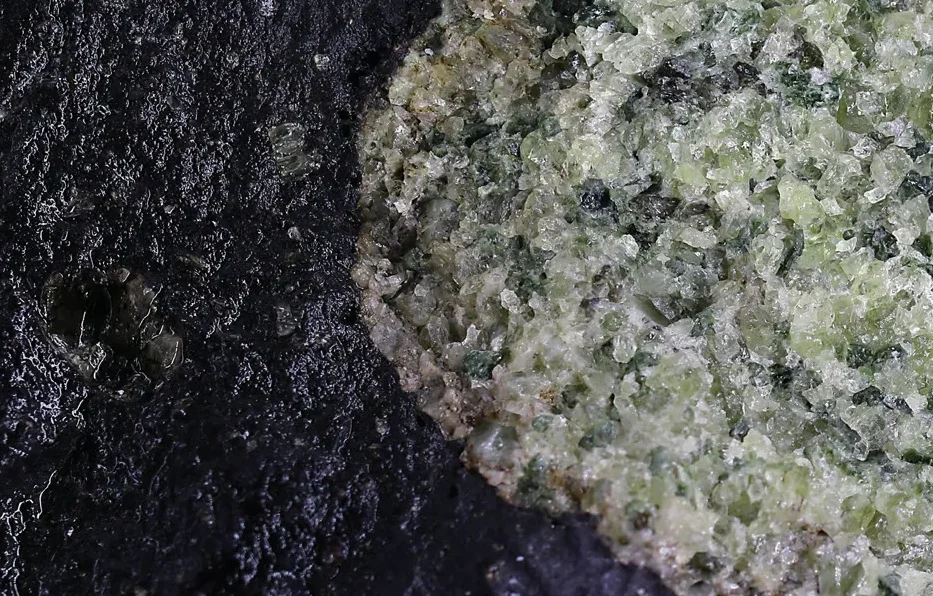
- Evolution and Structure of the European Variscan Lithospheric Mantle
- Granites and the Nature of the Variscan Crust
- Assembling Pangaea – The Complex Morphology of the Laurussia–Gondwana Collision
EARTH’S CARBON CYCLE THERMOSTAT: BEYOND THE TEXTBOOK MODEL
Guest Editors: Laurence Coogan (University of Victoria, Canada), Kimberly Lau (Penn State University, USA), and Jeremy Caves Rugenstein (Colorado State University, USA)
Earth’s geological carbon cycle is generally considered to act as a “thermostat,” regulating climate and preventing global mean temperatures from fluctuating wildly. The textbook model of this regulation involves variations in solid Earth degassing rates, leading to changes in atmospheric CO2 concentrations, surface temperature, and precipitation; in turn, these change the rate of alkalinity production via continental silicate weathering, which changes the rate of carbonate mineral formation, thereby rebalancing the carbon cycle. Over the last two decades, various alternative or additional mechanisms that may be equally or more important in regulating Earth’s carbon cycle have been described. This issue highlights advances in our understanding of the regulation of the long-term carbon cycle and emphasizes the large uncertainties that still remain regarding the fundamental controls of Earth’s life-support system.
- How Well Do We Understand the Geological Carbon Cycle? Laurence Coogan (University of Victoria, Canada), Kimberly Lau (Penn State University, USA), and Jeremy Caves Rugenstein (Colorado State University, USA)
- Igneous and Metamorphic CO2 Sources: How Large and How Variable? Emily Stewart (Florida State University, USA) and Kei Shimizu (NASA, USA)
- Continental Weathering as a Geological Thermostat Gaojun Li (Nanjing University, China) and Gen K. Li (University of California, Santa Barbara, USA)
- Seawater Interaction with Oceanic Basement and Sediments Wolfgang Bach (University of Bremen, Germany) and Alex Diehl (University of Bremen, Germany)
- The Fate of Ocean Alkalinity: Carbonate Formation and Reverse Weathering Reactions Shaily Rahman (University of Colorado Boulder, USA) and Elizabeth Trower (University of Colorado Boulder, USA)
- Burned or Buried: What Controls the Long-Term Preservation of Organic Carbon? Sandra Arndt (Université Libre de Bruxelles, Belgium) and Dominik Hülse (University of Bremen, Germany)
- Earth’s Carbon Cycle Thermostat: Beyond the Textbook Model (February 2026)
- Discovery of Volatiles on the Moon: Renaissance in Lunar Exploration Science & Beyond (April 2026)
- Mineral Physics Applied to Earth and Planetary Sciences (June 2026)
- Quartz (August 2026)
- Stromatolites – Deep Time Geochemical Archives of Microbial Ecosystems on Earth (October 2026)
- Zeolites (December 2026)
Thematic Articles