Thematic Articles

The Internal Structure of Io

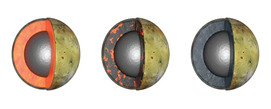
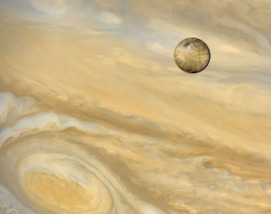
Io is a differentiated body with a silicate crust and mantle, and an iron-rich core. However, its internal structure, especially that of its mantle, differs from that of other terrestrial bodies, as a result of the intense heat supply by tidal dissipation. The amount and distribution of melt in Io’s interior strongly depend on the composition, as well as the heat and mass transport mecha- nisms operating at depth and in the near-surface. This article discusses melting processes and the mechanisms of magma segregation inside Io, informed by Earth-based observations and spacecraft measurements, as well as thermo- chemical and thermo-physical modeling.

This content is for Registered members only. To subscribe, please
join one of our participating societies or contact the Editorial Team.

Login
Already a member? Log in here

The Internal Structure of Io Read More »
Io’s Volcanic Activity and Atmosphere

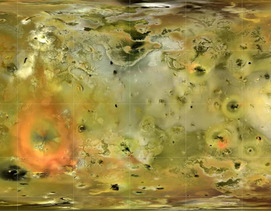
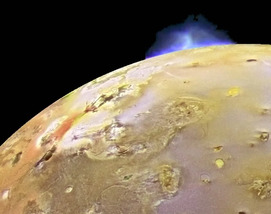
Driven by tidal heating, Io’s extreme volcanism has created a young, impact crater–free surface dominated by hundreds of active volcanic centres. From these volcanoes erupt voluminous, low-viscosity, high-temperature silicate lavas. Volcanic plumes, from venting gas and mobilised surface ices (primarily SO2 and S), contribute to Io’s thin atmosphere. Away from volcanoes, SO2 ice on the surface alternately sublimes during the daytime and condenses during eclipses and at night, resulting in a strong day/night atmospheric dichotomy. Sunlight and radiation bombardment at high altitude breaks the gas molecules apart, leading to the formation of SO, O, O2, S, K, Na, and Cl. These atoms reside as both neutral and charged particles in clouds that are found along Io’s orbit around Jupiter.

This content is for Registered members only. To subscribe, please
join one of our participating societies or contact the Editorial Team.

Login
Already a member? Log in here

Io’s Volcanic Activity and Atmosphere Read More »

Tidal Heating in Io

Io experiences strong, periodic, gravitational tides from Jupiter because of its close distance to the planet and its elliptic orbit. This generates internal friction that heats the interior, a naturally occurring process in the Solar System and beyond. Io is unique in our Solar System because it gets most of its internal energy from this tidal heating, providing an ideal laboratory for improving our understanding of this fundamental process that plays a key role in the thermal and orbital evolution of the Moon, satellites in the outer Solar System, and extrasolar planets.

This content is for Registered members only. To subscribe, please
join one of our participating societies or contact the Editorial Team.

Login
Already a member? Log in here

Tidal Heating in Io Read More »

Io: A Unique World in our Solar System

Jupiter’s moon Io is the most volcanically active world in our Solar System. Eruptions on Io sustain its atmosphere, feed the Jovian magnetosphere, and contaminate neighboring moons. This unique volcanic and tectonic activity is powered by tidal heating, caused by its gravitational interactions with Jupiter and other moons. The silicate crust of Io is coated with sulfur compounds, and its interior—one that is exceptional for an outer-planet moon—is composed of a metallic core and a silicate mantle that may host a magma ocean. Such spectacular large-scale volcanism and high heat flow provide insights into the processes that shaped all terrestrial bodies. Future exploration of Io would answer key questions and herald a new era of discoveries about the evolution of terrestrial planets and moons within our Solar System and beyond.

This content is for Registered members only. To subscribe, please
join one of our participating societies or contact the Editorial Team.

Login
Already a member? Log in here

Io: A Unique World in our Solar System Read More »

Sustainable Sourcing of Raw Materials for Construction: From the Earth to the Moon and Beyond

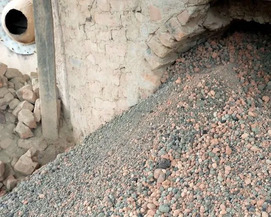
Each year, nearly 40 billion tonnes of raw materials extracted from the Earth’s crust feed into the construction industry. The associated material flows dramatically contribute to anthropogenic CO2 emissions. Therefore, more sustainable supply chains must be envisaged based on the use of locally available resources and the principles of circular economy. Drawing inspiration from vernacular architecture, innovative solutions for green construction based on sustainable exploitation of local resources can be posited. This strategy has also inspired the proposed practice of in situ resource utilization on planetary bodies such as the Moon and Mars.

This content is for Registered members only. To subscribe, please
join one of our participating societies or contact the Editorial Team.

Login
Already a member? Log in here

Sustainable Sourcing of Raw Materials for Construction: From the Earth to the Moon and Beyond Read More »

Polarization-fluorescence Microscopy in the Study of Aggregates and Concrete

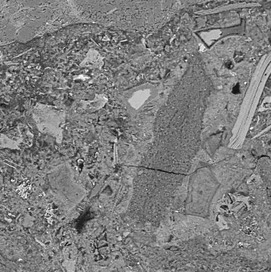
Concrete structures may develop deleterious damage, which significantly reduces service life, structural integrity, and safety, posing serious issues in large or otherwise critical infrastructure. Routine petrographic assessments, including microstructure, texture, and fabric, of concrete and its (gravel and sand) aggregate and binder constituents in thin section using polarization-fluorescence microscopy (PFM) enables the unequivocal identification of features that would otherwise remain hidden in conventional petrography. Rigorous preparation procedures preserve original microstructural details, make preparation artefacts recognizable, and ensure that the fluorescent emission can be quantified. This contribution outlines the preparation of fluorescence-impregnated thin sections and elaborates on the application of PFM to damaged concrete, with further examples from selected rock types commonly used for concrete aggregate.

This content is for Registered members only. To subscribe, please
join one of our participating societies or contact the Editorial Team.

Login
Already a member? Log in here

Polarization-fluorescence Microscopy in the Study of Aggregates and Concrete Read More »

Alternative Non-Portland Binders

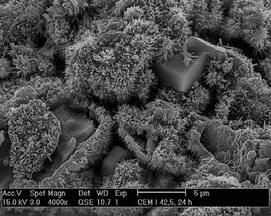
A background on non-Portland cementitious binders is presented, f ollowed by a review of the key alternative binders that are currently of interest. The mineralogy of these cements is described, along with
phases present in the reacted/hardened materials. The similarities and differ-ences between the setting processes, as controlled by reactions at the solid–liquid interface, provide insight into the ways in which different classes of binders develop their performance and thus offer value to society.

This content is for Registered members only. To subscribe, please
join one of our participating societies or contact the Editorial Team.

Login
Already a member? Log in here

Alternative Non-Portland Binders Read More »

The Rise of Portland Cements

This chapter tells the story of Portland cement, from its invention in the
19th century until its present-day hegemony as the number one manufactured mineral product. The success story of Portland cement is rooted in
the unique combination of the abundance of its raw materials, the reactivity of the high-temperature clinker product toward water, and the properties of the calcium silicate and aluminate hydration products. Further development of Portland cements today mainly addresses the formidable challenge of reducing process CO2 emissions. Options include partial replacement of clinker by low-carbon resources, material-efficient use of cement and concrete products, and end-of-pipe carbon capture and storage or use.

This content is for Registered members only. To subscribe, please
join one of our participating societies or contact the Editorial Team.

Login
Already a member? Log in here

The Rise of Portland Cements Read More »

Historic Concrete Science: Opus Caementicium to “Natural Cements”

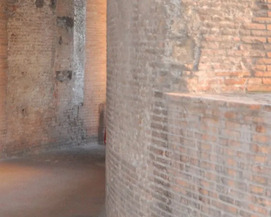
The history of mineral components in cementitious materials begins with clays and bitumen in the most ancient mortars, followed by gypsum- and lime-based plasters, mortars, and concretes. Romans perfected the fabrication of extremely durable mortars that form the basis of audacious architectural monuments in Rome, massive harbor constructions, and water-proofed cisterns in the Mediterranean region. During the industrial revolution, “natural cements” were developed through the burning of impure limestone or Si- and Al-bearing materials blended with pure limestone. Delving into the past of concrete science and the composition, durability, and resilience of historic binders, mortars, and concretes can inspire the development of modern environmentally friendly cementitious materials.

This content is for Registered members only. To subscribe, please
join one of our participating societies or contact the Editorial Team.

Login
Already a member? Log in here

Historic Concrete Science: Opus Caementicium to “Natural Cements” Read More »

Cement and Concrete—Past, Present, and Future

The need to meet the globally increasing demand for construction
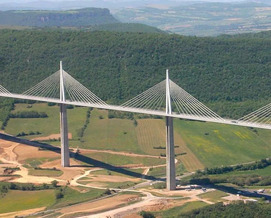
materials, while reducing the environmental impact of cement and concrete production, poses a technological and societal dilemma. Detailed knowledge concerning the mineralogical, geochemical, and microstructural features of ancient and modern binders is fundamental for novel, sustainable, cement-based materials to be designed, manufactured, and deployed. This introduction provides several basic concepts related to cement and concrete, as well as a general overview of the role played by these construction materials in ancient civilizations and in today’s society, and of how they are expected to evolve to ensure a sustainable, inclusive, and resilient urban future.

This content is for Registered members only. To subscribe, please
join one of our participating societies or contact the Editorial Team.

Login
Already a member? Log in here

Cement and Concrete—Past, Present, and Future Read More »

Scroll to Top

December 2025 --The Variscan Orogeny in Europe – Understanding Supercontinent Formation

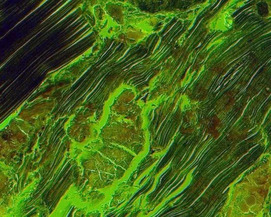
The Variscan orogen formed between 380 and 300 million years ago through several accretionary and collisional cycles, culminating with the construction of the Pangea supercontinent. This process occurred via sequential opening and closure of oceanic basins, synchronous detachment of Gondwana derived continental ribbons, and their outboard amalgamation onto the Laurussia margin. The Variscan orogen is rather unique compared with other orogenic belts on Earth: its overthickened and dominantly magmatic crust in the central belt, surprisingly minor mantle involvement in the magmatic and geodynamic processes, coherent and pulsed magmatism along the collision suture, and its complex accretionary history. Because its final product, Pangea, is the youngest and best-understood supercontinent on Earth, the Variscan orogeny offers clues for understanding the mechanisms of supercontinent formation.