Thematic Articles

Origin of Water in the Terrestrial Planets: Insights from Meteorite Data and Planet Formation Models

Water condensed as ice beyond the water snowline, the location in the Sun’s natal gaseous disk where temperatures were below 170 K. As the disk evolved and cooled, the snowline moved inwards. A low temperature in the terrestrial planet-forming region is unlikely to be the origin of water on the planets, and the distinct isotopic compositions of planetary objects formed in the inner and outer disks suggest limited early mixing of inner and outer Solar System materials. Water in our terrestrial planets has rather been derived from H-bearing materials indigenous to the inner disk and delivered by water-rich planetesimals formed beyond the snowline and scattered inwards during the growth, migration, and dynamical evolution of the giant planets.

This content is for Registered members only. To subscribe, please
join one of our participating societies or contact the Editorial Team.

Login
Already a member? Log in here

Origin of Water in the Terrestrial Planets: Insights from Meteorite Data and Planet Formation Models Read More »

Recent Advances in our Understanding of Water and Aqueous Activity in Chondrites

Water played a critical role in the evolution of rocky material and planetesimals in the early Solar System. Many primitive asteroids (the sources of chondrites) accreted a significant amount of water ice and were affected by aqueous alteration and/or fluid-assisted metamorphism. These secondary parent body processes have strongly modified the primary mineralogy of chondrites in favor of a wide diversity of secondary phases that formed by interaction with water. The mineralogical and isotopic character- ization of these secondary phases in chondrites and returned samples from hydrous asteroids Ryugu and Bennu can help us reconstruct the dynamical evolution of water in the early Solar System and understand the timing and mechanisms of aqueous alteration on hydrous asteroids.

This content is for Registered members only. To subscribe, please
join one of our participating societies or contact the Editorial Team.

Login
Already a member? Log in here

Recent Advances in our Understanding of Water and Aqueous Activity in Chondrites Read More »

Water in Differentiated Planets, the Moon, and Asteroids

The distribution of water in differentiated Solar System bodies depends on many factors including size, distance from the Sun, and how they incorporated water. Most of this water is likely locked as hydrogen in mantle minerals and could amount to several Earth oceans worth in mass for the largest planets. An essential compound for the development of life, water also has a tremendous influence on planetary evolution and volcanism. Only Earth has an active exchange of water between surface and mantle. Surface water on other differentiated bodies mostly results from degassing by volca- noes whose mantle sources are inherited from magma ocean processes early in their history. Airless bodies also acquire surface water by impacts, spallation, and from the solar wind.

This content is for Registered members only. To subscribe, please
join one of our participating societies or contact the Editorial Team.

Login
Already a member? Log in here

Water in Differentiated Planets, the Moon, and Asteroids Read More »

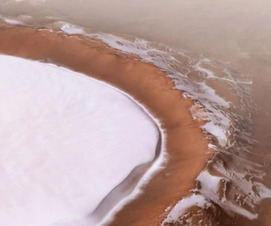
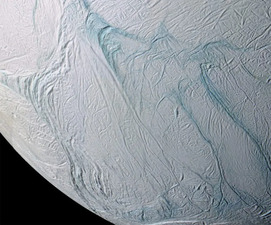
Ocean Worlds In Our Solar System

Spacecraft-based missions have discovered an increasing number of ocean worlds in our Solar System, with even more candidates awaiting confirmation. The science of ocean worlds shares some commonalities with that of Earth’s oceans, making them exciting targets of future exploration. A major known difference, however, is that ice shells up to tens of kilometers thick may present barriers to the introduction of chemical gradients necessary for life’s development over the long term. Hence, ocean worlds differ substantially in terms of their energy budget and chemistry, with Europa and Enceladus being currently considered the most promising candidates for life-search missions.

This content is for Registered members only. To subscribe, please
join one of our participating societies or contact the Editorial Team.

Login
Already a member? Log in here

Ocean Worlds In Our Solar System Read More »

We Drink Good 4.5-Billion-Year-Old Water

Water is crucial for the emergence and evolution of life on Earth. Recent studies of the water content in early forming planetary systems similar to our own show that water is an abundant and ubiquitous molecule, initially synthesized on the surfaces of tiny interstellar dust grains by the hydrogenation of frozen oxygen. Water then enters a cycle of sublimation/freezing throughout the successive phases of planetary system formation, namely, hot corinos and protoplanetary disks, eventually to be incorporated into planets, asteroids, and comets. The amount of heavy water measured on Earth and in early forming planetary systems suggests that a substantial fraction of terrestrial water was inherited from the very first phases of the Solar System formation and is 4.5 billion years old.

This content is for Registered members only. To subscribe, please
join one of our participating societies or contact the Editorial Team.

Login
Already a member? Log in here

We Drink Good 4.5-Billion-Year-Old Water Read More »

The Quest For Water

Water played a key role in shaping the Solar System—from the formation of early solids to the processes of planetary and moon formation. The presence of water in molecular clouds influences the initial abundance and distribution of water in the circumsolar disk, which, in turn, affected the water budget of the terrestrial planets and, therefore, their geological activity and habitability. On Earth, surficial and deep-water cycles have largely governed the planet’s geodynamical and geochemical evolu- tion. This issue focuses on the past and present distribution of water within the Solar System and how this important molecule affects astrophysical and geological processes.

This content is for Registered members only. To subscribe, please
join one of our participating societies or contact the Editorial Team.

Login
Already a member? Log in here

The Quest For Water Read More »

Future Outlook for Applications of Biomarkers and Isotopes in Organic Geochemistry

Organic geochemistry continues to make important contributions to our understanding of how the biogeochemistry of our planet and its environment has changed over time and of the role of human impacts today. This article provides a brief overview of the field and a perspective on how it might develop in the near future. Particular emphasis is placed on biomarkers (compounds with a distinctive chemical structure that can be related to specific organisms) and stable isotopes of carbon, hydrogen, and nitrogen, as these are major tools used by organic geochemists. Many geochemical studies involve a mixture of disciplines and so this article also focuses on how this research area can complement work in other fields.

This content is for Registered members only. To subscribe, please
join one of our participating societies or contact the Editorial Team.

Login
Already a member? Log in here

Future Outlook for Applications of Biomarkers and Isotopes in Organic Geochemistry Read More »

Advancing Analytical Frontiers in Molecular Biomarker Research Through Spatial and Mass Resolution

Analytical developments have been crucial for the advancement of molecular biomarker research in the Earth sciences. In this chapter, we focus on two areas where recent technological developments have profoundly impacted the use and relevance of molecular organic biomarkers: (1) the increase in spatial resolution heralded by imaging techniques, which results in biomarker-based paleoenvironmental reconstruction with unprecedented temporal resolution; and (2) the accurate, simultaneous characterization of a wide range of compounds in complex matrices enabled by ultra-high- resolution mass spectrometry.

This content is for Registered members only. To subscribe, please
join one of our participating societies or contact the Editorial Team.

Login
Already a member? Log in here

Advancing Analytical Frontiers in Molecular Biomarker Research Through Spatial and Mass Resolution Read More »

Biomarkers in Extreme Environments on Earth and the Search for Extraterrestrial Life in Our Solar System

Our appreciation of the potential distribution of life in the Solar System has been impacted by the discovery that organisms are able to occupy the most extreme environments on Earth. The persistence of life in the deepest parts of oceans, the deep sedimentary and crustal biosphere accessed by deep drill holes, hot springs, deserts, and polar regions has led to diverse hypotheses regarding the potential for extraterrestrial life on other planets. This chapter provides an overview on how scientists explore the habitability of other planets and moons of our Solar System and far away in outer space and how future space missions aim to find evidence for extraterrestrial life.

This content is for Registered members only. To subscribe, please
join one of our participating societies or contact the Editorial Team.

Login
Already a member? Log in here

Biomarkers in Extreme Environments on Earth and the Search for Extraterrestrial Life in Our Solar System Read More »

Biomarkers in the Precambrian: Earth’s Ancient Sedimentary Record

The hydrocarbon remnants of biologically diagnostic lipids inform our understanding of Earth’s early ecosystems, particularly where morpho- logical vestiges of biology are absent or ambiguous. Yet both the analysis and interpretation of ancient biomarkers require scrutinous approaches. Here, we describe the status quo of Precambrian biomarker geochemistry with four examples that highlight current challenges and opportunities.

This content is for Registered members only. To subscribe, please
join one of our participating societies or contact the Editorial Team.

Login
Already a member? Log in here

Biomarkers in the Precambrian: Earth’s Ancient Sedimentary Record Read More »

Scroll to Top

December 2025 --The Variscan Orogeny in Europe – Understanding Supercontinent Formation

The Variscan orogen formed between 380 and 300 million years ago through several accretionary and collisional cycles, culminating with the construction of the Pangea supercontinent. This process occurred via sequential opening and closure of oceanic basins, synchronous detachment of Gondwana derived continental ribbons, and their outboard amalgamation onto the Laurussia margin. The Variscan orogen is rather unique compared with other orogenic belts on Earth: its overthickened and dominantly magmatic crust in the central belt, surprisingly minor mantle involvement in the magmatic and geodynamic processes, coherent and pulsed magmatism along the collision suture, and its complex accretionary history. Because its final product, Pangea, is the youngest and best-understood supercontinent on Earth, the Variscan orogeny offers clues for understanding the mechanisms of supercontinent formation.