Thematic Articles

The Central Andes: Elements of an Extreme Land

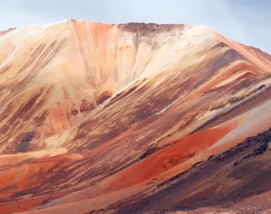
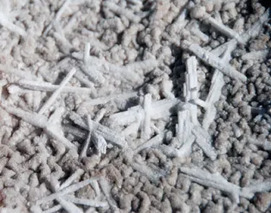
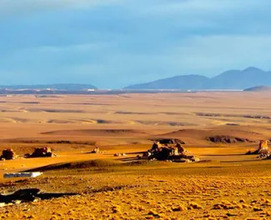
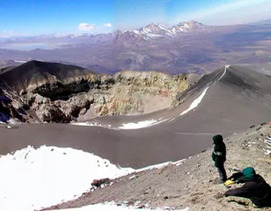
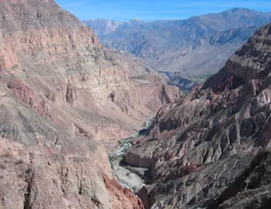
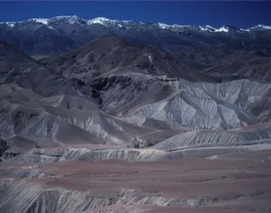
The Central Andes and the Atacama Desert represent a unique geological, climatic, and magmatic setting on our planet. It is the only place on Earth where subduction of an oceanic plate below an active continental margin has led to an extensive mountain chain and an orogenic plateau that is second in size only to the Tibetan Plateau, which resulted from continental collision. In this article, we introduce the history of the Central Andes and the evolution of its landscape. We also discuss links between tectonic forces, magmatism, and the extreme hyperarid climate of this land that, in turn, has led to rich deposits of precious ores and minerals.

This content is for Registered members only. To subscribe, please
join one of our participating societies or contact the Editorial Team.

Login
Already a member? Log in here

The Central Andes: Elements of an Extreme Land Read More »

Remote Sensing Applications for Viticultural Terroir Analysis

With the rise of remotely piloted aircraft systems, increasing computing power and advances in image processing software, the opportunities for vineyard observations through remote sensing are increasing. Remote sensing and image analysis techniques that are becoming more available include object-based image analysis, spatiotemporal analysis, hyperspectral analysis, and topoclimatology. Each of these techniques are described and discussed as potential for development within a viticulture and terroir context. While remote sensing applications are well established at the smaller precision viticulture scale, the larger spatial scale of terroir analysis requires adaptation and new models of analysis.

This content is for Registered members only. To subscribe, please
join one of our participating societies or contact the Editorial Team.

Login
Already a member? Log in here

Remote Sensing Applications for Viticultural Terroir Analysis Read More »

The Scale Dependence of Wine and Terroir: Examples from Coastal California and the Napa Valley (USA)

The physical parameters of terroir are scale dependent. At the regional scale, climate is paramount and relates to the grape varietals most suited to the setting. Intermediate factors include geologic setting, sun exposure, and topography, all of which influence grape quality and character. At the smaller scale, soil character and local climatic variation shape grape flavor and aroma. These notions are discussed in relation to four California (USA) wine regions: Sonoma County, Paso Robles, Santa Barbara County, and Napa Valley.

This content is for Registered members only. To subscribe, please
join one of our participating societies or contact the Editorial Team.

Login
Already a member? Log in here

The Scale Dependence of Wine and Terroir: Examples from Coastal California and the Napa Valley (USA) Read More »

Environmental and Viticultural Effects on Grape Composition and Wine Sensory Properties

The most important characteristics upon which wines are evaluated are the intensity and complexity of their flavors. Flavor describes the combined impression created by both the volatile compounds, which are responsible for wine aroma, and the nonvolatile components, which determine the taste sensation. Environmental factors (topography, soil, climate), termed terroir, influence the levels of grape metabolites related to wine organoleptic properties, i.e. properties that can be detected by the sense organs, such as taste, color, odor, and feel. However, modern vineyard management practices have the potential to modify a vine’s response to natural site influences and so modify the flavor of the resultant wine.

This content is for Registered members only. To subscribe, please
join one of our participating societies or contact the Editorial Team.

Login
Already a member? Log in here

Environmental and Viticultural Effects on Grape Composition and Wine Sensory Properties Read More »

The Climate Component of Terroir

The choice of a given winegrape variety planted in its ideal climate, together with favorable topography and physical soil characteristics, combine to create the potential to produce fine wine. The French term terroir embodies this potential as a holistic concept that relates to both environmental and cultural factors that together influence the grape growing to wine production continuum. While the landscape, geology, and soil strongly interact to influence a vine’s balance of nutrients and water, it is the climate that is critical because it is this that limits where winegrapes can be grown at both the global and local scale. Whereas winegrape varieties are grown in numerous climates worldwide, they ultimately have relatively narrow climate zones for optimum growth, productivity and quality. In many regions a changing climate has already altered some aspects of winegrape production with earlier and more rapid plant growth and changes to ripening profiles and wine styles. As such the connections between varieties and their ideal terroirs are bound to be altered even further in the future. Research on grapevine and rootstock genetics, alterations in vineyard management, and adjustments in winemaking are addressing these issues to hopefully reduce the wine industry’s vulnerability and increase its adaptive capacity to future changes in climate.

This content is for Registered members only. To subscribe, please
join one of our participating societies or contact the Editorial Team.

Login
Already a member? Log in here

The Climate Component of Terroir Read More »

Major Soil-Related Factors in Terroir Expression and Vineyard Siting

A “terroir” is a cultivated ecosystem in which the vine interacts with the soil and the climate. The soil influences vine phenology and grape ripening through soil temperature, water supply and mineral supply. Limited water supply to the vines is critical for reaching a suitable grape composition in order to produce high quality red wines. Soil nitrogen availability also plays a key role in terroir expression. Ideally, vineyards should be established in areas where soil temperature (relative to air temperature), soil water-holding capacity (relative to rainfall and potential evapotranspiration) and soil nitrogen availability are optimum for the type of wine to be produced. Terroir expression can also be optimized by choosing appropriate plant material and via vineyard floor management techniques.

This content is for Registered members only. To subscribe, please
join one of our participating societies or contact the Editorial Team.

Login
Already a member? Log in here

Major Soil-Related Factors in Terroir Expression and Vineyard Siting Read More »

The Science of Terroir

Terroir involves the complex interplay of climate, soil, geology, and viticulture, all of which influence the character and quality of a wine from a given grape variety, rootstock, and viticultural practice. Contrary to the assertions of some wine writers, the minerals and character of the soil cannot be tasted in the wine. Rather, it is their effect on the grape ripening process that gives certain wines a “sense of place”. Most important is water availability, which is a function of climate (rainfall and humidity) and soil water-holding capacity. The soil structure reflects the geologic history of a region and may have evolved over millions of years as influenced by faulting, weathering, and bedrock mineralogy. Far-field effects such as glaciation and resultant sea-level change can affect landscapes that are thousands of kilometers apart.

This content is for Registered members only. To subscribe, please
join one of our participating societies or contact the Editorial Team.

Login
Already a member? Log in here

The Science of Terroir Read More »

The Formation of the Solar Systems: A Recipe for Worlds

This paper summarises the recipe – the raw and processed ingredients plus some of the processes – behind making our solar system 4,600 million years ago. Like a gourmand recipe, the solar system formed from many disparate ingredients, many of these ingredients themselves being the products of complex processes. Thus, to create the habitable solar system we see today required extensive work and processing. However, unlike a food recipe, much of how this happened is poorly understood, although a combination of new observations and analysis is ensuring that progress continues to be made.

This content is for Registered members only. To subscribe, please
join one of our participating societies or contact the Editorial Team.

Login
Already a member? Log in here

The Formation of the Solar Systems: A Recipe for Worlds Read More »

Comets in the Path of Earth

Earth’s atmosphere offers little protection against comet impacts, because many comets are bigger than 1 km. Fewer comets hit Earth than asteroids of the same size, except perhaps for sizes larger than 10 km. Comets release copious amounts of solid debris called meteoroids, and these meteoroids disperse to form meteoroid streams, some of which cause meteor showers on Earth. Recent meteor shower observations reveal the presence of potentially dangerous parent comets and trace their dynamical evolution. In addition, some showers leave a signature of “cosmic dust” in our atmosphere.

This content is for Registered members only. To subscribe, please
join one of our participating societies or contact the Editorial Team.

Login
Already a member? Log in here

Comets in the Path of Earth Read More »

Organic Molecules and Volatiles in Comets

Organic molecules and volatiles (e.g. H2O, CO, CO2) are the major components of comets. The majority of the organic compounds found within comets were produced by ice irradiation in dense molecular clouds and in the protoplanetary disk prior to comet formation. Comets are essentially repositories of protocometary material. As a result, comets do not show the clear trends in chemical and isotopic compositions that would be expected from our understanding of their formation locations. Rather, comets record chemical evolution in the protoplanetary disk and allow us to unveil the formation history of the organics and volatiles.

This content is for Registered members only. To subscribe, please
join one of our participating societies or contact the Editorial Team.

Login
Already a member? Log in here

Organic Molecules and Volatiles in Comets Read More »

Scroll to Top

December 2025 --The Variscan Orogeny in Europe – Understanding Supercontinent Formation

The Variscan orogen formed between 380 and 300 million years ago through several accretionary and collisional cycles, culminating with the construction of the Pangea supercontinent. This process occurred via sequential opening and closure of oceanic basins, synchronous detachment of Gondwana derived continental ribbons, and their outboard amalgamation onto the Laurussia margin. The Variscan orogen is rather unique compared with other orogenic belts on Earth: its overthickened and dominantly magmatic crust in the central belt, surprisingly minor mantle involvement in the magmatic and geodynamic processes, coherent and pulsed magmatism along the collision suture, and its complex accretionary history. Because its final product, Pangea, is the youngest and best-understood supercontinent on Earth, the Variscan orogeny offers clues for understanding the mechanisms of supercontinent formation.