Thematic Articles

Incubating Life: Prebiotic Sources of Organics for the Origin of Life

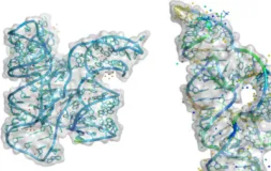
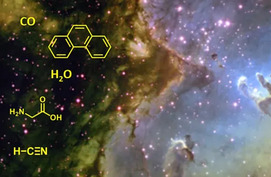
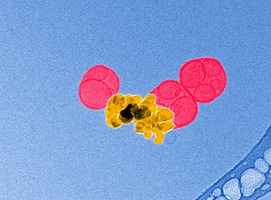
The onset of life on Earth was preceded by prebiotic chemistry in which complex organic molecules were formed from simpler ones in the presence of energy sources. These prebiotic organics were either synthesized on Earth itself (endogenously) or synthesized extraterrestrially (exogenously) and then delivered to Earth. Organics have been detected in space and have been successfully synthesized under experimental conditions simulating both extraterrestrial environments and early Earth environments. Homochirality and enantiomeric enrichment of organic molecules, which were once considered to be biosignatures, can, in fact, be achieved abiotically. It is important to determine conditions that allow the formation of prebiotic organics and those that preserve them against degradation.

This content is for Registered members only. To subscribe, please
join one of our participating societies or contact the Editorial Team.

Login
Already a member? Log in here

Incubating Life: Prebiotic Sources of Organics for the Origin of Life Read More »

Staging Life in an Early Warm ‘Seltzer’ Ocean

The stage for the origin of life may have been set during a period that was as short as 20 million years within the first 100 million years after the formation of the Moon (at ~4.5 Ga). The atmosphere at that time contained more carbon dioxide than at any other period thereafter. Carbon dioxide sustained greenhouse conditions, accelerated the weathering of a primitive crust, and may have led to conditions conducive to forming the building blocks of life. The conversion of inorganic carbon and nitrogen to the essential building blocks of life may have been facilitated by clays, zeolites, sulfides, and metal alloys that had been formed as the crust reacted with a warm and carbonated (seltzer) ocean. Geochemical modeling constrains the conditions favorable for the formation of these potential mineral catalysts.

This content is for Registered members only. To subscribe, please
join one of our participating societies or contact the Editorial Team.

Login
Already a member? Log in here

Staging Life in an Early Warm ‘Seltzer’ Ocean Read More »

The Transition from Geochemistry to Biogeochemistry

Paradigm-changing discoveries about stellar and planetary evolution, the survival of organic molecules and microorganisms under extreme conditions, and geochemical environments on early Earth and other planets are sparking a synergistic dialogue between geoscientists, chemists, and biologists to understand how life originated. To achieve this goal, we must (i) explain the non enzymatic synthesis of biologically relevant organic molecules under geologically plausible conditions; (ii) overcome the rigid conceptual dichotomy of the “RNA world” versus the “metabolism-first” hypotheses; and (iii) develop high-throughput analytical systems to sample the myriad possible combinations of environmental conditions to find those that could initiate life. This issue of Elements highlight the roles of minerals and geochemical environments in the emergence of protocells, the cell-like entities that might have preceded the Last Universal Common Ancestor.

This content is for Registered members only. To subscribe, please
join one of our participating societies or contact the Editorial Team.

Login
Already a member? Log in here

The Transition from Geochemistry to Biogeochemistry Read More »

Status and Prospects for Quasi-Non-Destructive Analysis of Ancient Artefacts via LA–ICP–MS

Laser ablation inductively coupled plasma mass spectrometry (LA–ICP–MS) combines a low degree of invasiveness (termed quasi-non-destructive) with measurements of concentrations of elements and/or their isotopic compositions in artefacts. The technique has risen to prominence in archaeometric research. Successful applications include the use of trace elements to document the trade of raw glass from Egypt and Mesopotamia to Mycenaean Greece during the Late Bronze Age and the use of Pb isotope ratios to show that a common source of metal was used to mint bronze coins in an ancient Roman city on the Iberian Peninsula during the reigns of Emperors Augustus to Claudius. Prospects for using LA–ICP–MS for elemental mapping (imaging) and for extending the application of isotopic tracing for archaeometry are evaluated.

This content is for Registered members only. To subscribe, please
join one of our participating societies or contact the Editorial Team.

Login
Already a member? Log in here

Status and Prospects for Quasi-Non-Destructive Analysis of Ancient Artefacts via LA–ICP–MS Read More »

Applications of LA–ICP–MS to Forensic Science

Laser ablation inductively coupled plasma mass spectrometry (LA–ICP–MS) provides qualitative and quantitative measurements of the elemental and isotopic composition of materials that are of interest to forensic scientists. The technique can chemically characterize physical evidence associated with a crime event, a location, contact between objects or contact between objects and a person(s). This review details the forensic application of this powerful technique for the analysis of glass, soils, ink, paper and adhesive tapes, all important evidence that benefits from trace element profiling. In addition, other applications of LA–ICP–MS for forensic purposes are referenced, including food authentication, and gold and diamond provenance.

This content is for Registered members only. To subscribe, please
join one of our participating societies or contact the Editorial Team.

Login
Already a member? Log in here

Applications of LA–ICP–MS to Forensic Science Read More »

The Role of LA–ICP–MS in Palaeoclimate Research

Past environmental parameters such as temperature, pH and CO2 can be reconstructed from chemical ‘proxies’ (elemental and isotopic compositions) stored in various ‘archives’ such as corals, foraminifera and bivalves. Versatile, rapid, simple and comparatively inexpensive microanalysis via laser ablation inductively coupled plasma mass spectrometry (LA–ICP–MS) provides precise and accurate proxy data and chronologies at micrometer resolution. Moreover, LA–ICP–MS can extract data at a high-temporal resolution from continuously growing samples and even works on partially altered samples. The latter enhances our understanding of ‘deep-time’ palaeoclimate events. Using case studies of various carbonate-hosted archives (coralline algae, giant clams) to illustrate multi-proxy mapping (temperature, pH) and chronology, we showcase current methodological practice and achievements. We conclude with an outlook on likely future LA–ICP–MS developments relevant to palaeoclimatology.

This content is for Registered members only. To subscribe, please
join one of our participating societies or contact the Editorial Team.

Login
Already a member? Log in here

The Role of LA–ICP–MS in Palaeoclimate Research Read More »

Microanalysis of Fluid Inclusions in Crustal Hydrothermal Systems using Laser Ablation Methods

Quantitative analysis of microscopic fluid inclusions by laser ablation inductively coupled plasma mass spectrometry (LA–ICP–MS) has greatly improved our understanding of fluid–rock interactions and ore deposit formation. Spatially resolved analysis can track the chemical evolution of fluids within texturally complex veins and along fluid pathways. LA–ICP–MS makes it possible to analyze chemical (e.g. Br/Cl) and isotopic tracers (e.g. Pb), and to identify fluid sources and timescales of transient fluid flow. LA–ICP–MS analysis has demonstrated that selectively metal-enriched fluids control the formation of magmatic-hydrothermal and sediment-hosted ore deposits and that sulfur decisively influences the partitioning, transport, and precipitation of metals in crustal fluids.

This content is for Registered members only. To subscribe, please
join one of our participating societies or contact the Editorial Team.

Login
Already a member? Log in here

Microanalysis of Fluid Inclusions in Crustal Hydrothermal Systems using Laser Ablation Methods Read More »

Advances in Isotope Ratio Determination by LA–ICP–MS

LA–ICP–MS has proven to be an extremely important analytical tool within the Earth, environmental, and archaeological sciences. New developments in both instrumentation and methodology now provide the ability to extract age and isotopic tracer information in situ at a variety of scales (from nm to cm), in 2- and 3-dimensions, quickly and cost-effectively, providing considerable analytical flexibility compared to other micro-analytical techniques. Here, we review the current state of the art in laser ablation isotope ratio determination and provide some insights into future developments.

This content is for Registered members only. To subscribe, please
join one of our participating societies or contact the Editorial Team.

Login
Already a member? Log in here

Advances in Isotope Ratio Determination by LA–ICP–MS Read More »

Major and Trace Element Analysis of Natural and Experimental Igneous Systems using LA–ICP–MS

Laser ablation inductively coupled plasma mass spectrometry (LA–ICP–MS) enables spatially resolved quantitative measurements of major, minor and trace element abundances in igneous rocks and minerals with equal or better precision than many other in situ techniques, and more rapidly than labour-intensive wet chemistry procedures. Common applications for LA–ICP–MS in the Earth sciences centre on investigating the composition of natural and experimental geological materials, including: analysis of whole rock silicate glasses, flux-free pressed powder tablets and/or fused aliquots of materials; in situ probing of individual minerals, xenocrysts, fluid and melt inclusions, experimental run products, and siderophile-rich micronuggets; and multidimensional chemical mapping of complex (multiphase) materials.

This content is for Registered members only. To subscribe, please
join one of our participating societies or contact the Editorial Team.

Login
Already a member? Log in here

Major and Trace Element Analysis of Natural and Experimental Igneous Systems using LA–ICP–MS Read More »

A Brief History of Laser Ablation Inductively Coupled Plasma Mass Spectrometry (LA–ICP–MS)

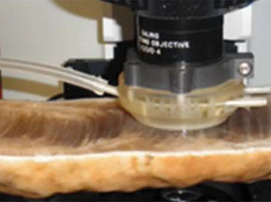
Laser ablation inductively coupled plasma mass spectrometry (LA–ICP–MS) has been used for more than 30 years to determine the elemental composition of natural and synthesized objects. A focused laser beam ablates a small volume of target material, and the aerosol produced is transferred in a gas stream to an ICP–MS for elemental and/or isotopic analysis. Through the increasing use of deep ultraviolet lasers and ultra-sensitive mass spectrometers, the technique has evolved towards higher sampling resolution and to generating 2-D (and 3-D) images of compositional variations. The future is likely to see femtosecond lasers and simultaneous mass spectrometers in common use, making new research areas possible.

This content is for Registered members only. To subscribe, please
join one of our participating societies or contact the Editorial Team.

Login
Already a member? Log in here

A Brief History of Laser Ablation Inductively Coupled Plasma Mass Spectrometry (LA–ICP–MS) Read More »

Scroll to Top

December 2025 --The Variscan Orogeny in Europe – Understanding Supercontinent Formation

The Variscan orogen formed between 380 and 300 million years ago through several accretionary and collisional cycles, culminating with the construction of the Pangea supercontinent. This process occurred via sequential opening and closure of oceanic basins, synchronous detachment of Gondwana derived continental ribbons, and their outboard amalgamation onto the Laurussia margin. The Variscan orogen is rather unique compared with other orogenic belts on Earth: its overthickened and dominantly magmatic crust in the central belt, surprisingly minor mantle involvement in the magmatic and geodynamic processes, coherent and pulsed magmatism along the collision suture, and its complex accretionary history. Because its final product, Pangea, is the youngest and best-understood supercontinent on Earth, the Variscan orogeny offers clues for understanding the mechanisms of supercontinent formation.