Thematic Articles

Applications of LA–ICP–MS to Forensic Science

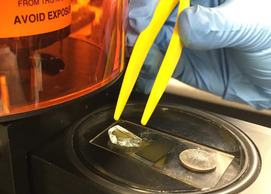
Laser ablation inductively coupled plasma mass spectrometry (LA–ICP–MS) provides qualitative and quantitative measurements of the elemental and isotopic composition of materials that are of interest to forensic scientists. The technique can chemically characterize physical evidence associated with a crime event, a location, contact between objects or contact between objects and a person(s). This review details the forensic application of this powerful technique for the analysis of glass, soils, ink, paper and adhesive tapes, all important evidence that benefits from trace element profiling. In addition, other applications of LA–ICP–MS for forensic purposes are referenced, including food authentication, and gold and diamond provenance.

This content is for Registered members only. To subscribe, please
join one of our participating societies or contact the Editorial Team.

Login
Already a member? Log in here

Applications of LA–ICP–MS to Forensic Science Read More »
The Role of LA–ICP–MS in Palaeoclimate Research

Past environmental parameters such as temperature, pH and CO2 can be reconstructed from chemical ‘proxies’ (elemental and isotopic compositions) stored in various ‘archives’ such as corals, foraminifera and bivalves. Versatile, rapid, simple and comparatively inexpensive microanalysis via laser ablation inductively coupled plasma mass spectrometry (LA–ICP–MS) provides precise and accurate proxy data and chronologies at micrometer resolution. Moreover, LA–ICP–MS can extract data at a high-temporal resolution from continuously growing samples and even works on partially altered samples. The latter enhances our understanding of ‘deep-time’ palaeoclimate events. Using case studies of various carbonate-hosted archives (coralline algae, giant clams) to illustrate multi-proxy mapping (temperature, pH) and chronology, we showcase current methodological practice and achievements. We conclude with an outlook on likely future LA–ICP–MS developments relevant to palaeoclimatology.

This content is for Registered members only. To subscribe, please
join one of our participating societies or contact the Editorial Team.

Login
Already a member? Log in here

The Role of LA–ICP–MS in Palaeoclimate Research Read More »

Microanalysis of Fluid Inclusions in Crustal Hydrothermal Systems using Laser Ablation Methods

Quantitative analysis of microscopic fluid inclusions by laser ablation inductively coupled plasma mass spectrometry (LA–ICP–MS) has greatly improved our understanding of fluid–rock interactions and ore deposit formation. Spatially resolved analysis can track the chemical evolution of fluids within texturally complex veins and along fluid pathways. LA–ICP–MS makes it possible to analyze chemical (e.g. Br/Cl) and isotopic tracers (e.g. Pb), and to identify fluid sources and timescales of transient fluid flow. LA–ICP–MS analysis has demonstrated that selectively metal-enriched fluids control the formation of magmatic-hydrothermal and sediment-hosted ore deposits and that sulfur decisively influences the partitioning, transport, and precipitation of metals in crustal fluids.

This content is for Registered members only. To subscribe, please
join one of our participating societies or contact the Editorial Team.

Login
Already a member? Log in here

Microanalysis of Fluid Inclusions in Crustal Hydrothermal Systems using Laser Ablation Methods Read More »

Advances in Isotope Ratio Determination by LA–ICP–MS

LA–ICP–MS has proven to be an extremely important analytical tool within the Earth, environmental, and archaeological sciences. New developments in both instrumentation and methodology now provide the ability to extract age and isotopic tracer information in situ at a variety of scales (from nm to cm), in 2- and 3-dimensions, quickly and cost-effectively, providing considerable analytical flexibility compared to other micro-analytical techniques. Here, we review the current state of the art in laser ablation isotope ratio determination and provide some insights into future developments.

This content is for Registered members only. To subscribe, please
join one of our participating societies or contact the Editorial Team.

Login
Already a member? Log in here

Advances in Isotope Ratio Determination by LA–ICP–MS Read More »

Major and Trace Element Analysis of Natural and Experimental Igneous Systems using LA–ICP–MS

Laser ablation inductively coupled plasma mass spectrometry (LA–ICP–MS) enables spatially resolved quantitative measurements of major, minor and trace element abundances in igneous rocks and minerals with equal or better precision than many other in situ techniques, and more rapidly than labour-intensive wet chemistry procedures. Common applications for LA–ICP–MS in the Earth sciences centre on investigating the composition of natural and experimental geological materials, including: analysis of whole rock silicate glasses, flux-free pressed powder tablets and/or fused aliquots of materials; in situ probing of individual minerals, xenocrysts, fluid and melt inclusions, experimental run products, and siderophile-rich micronuggets; and multidimensional chemical mapping of complex (multiphase) materials.

This content is for Registered members only. To subscribe, please
join one of our participating societies or contact the Editorial Team.

Login
Already a member? Log in here

Major and Trace Element Analysis of Natural and Experimental Igneous Systems using LA–ICP–MS Read More »

A Brief History of Laser Ablation Inductively Coupled Plasma Mass Spectrometry (LA–ICP–MS)

Laser ablation inductively coupled plasma mass spectrometry (LA–ICP–MS) has been used for more than 30 years to determine the elemental composition of natural and synthesized objects. A focused laser beam ablates a small volume of target material, and the aerosol produced is transferred in a gas stream to an ICP–MS for elemental and/or isotopic analysis. Through the increasing use of deep ultraviolet lasers and ultra-sensitive mass spectrometers, the technique has evolved towards higher sampling resolution and to generating 2-D (and 3-D) images of compositional variations. The future is likely to see femtosecond lasers and simultaneous mass spectrometers in common use, making new research areas possible.

This content is for Registered members only. To subscribe, please
join one of our participating societies or contact the Editorial Team.

Login
Already a member? Log in here

A Brief History of Laser Ablation Inductively Coupled Plasma Mass Spectrometry (LA–ICP–MS) Read More »

Selecting a Site for a Radioactive Waste Repository: A Historical Analysis

Every nation that has adopted a strategy for the long-term management of its high-level radioactive waste (HLW) and spent nuclear fuel (SF) has opted for disposal in a deep-mined, geological repository. Identifying a site for such a facility has proven to be a technical and social challenge. Over the last 50 years, both challenges have been met (at least so far) in only three out of the ten countries that have tried. This historical experience makes clear how important it is to gain social acceptability for a site’s selection: such acceptability is a prerequisite for policy making in democratic societies. The inability to gain social acceptability has proven to be the Achilles’ heel for most efforts to choose a repository site.

This content is for Registered members only. To subscribe, please
join one of our participating societies or contact the Editorial Team.

Login
Already a member? Log in here

Selecting a Site for a Radioactive Waste Repository: A Historical Analysis Read More »

Geological Disposal of Nuclear Waste in Tuff: Yucca Mountain (USA)

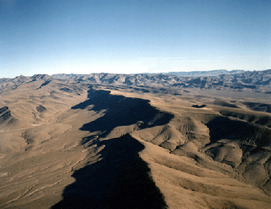
For more than three decades, the US Department of Energy has investigated the potential for permanent disposal of high-level radioactive waste and spent nuclear fuel in a deep-mined repository at Yucca Mountain, Nevada (USA). A detailed license application submitted to the US Nuclear Regulatory Commission in 2008 provides full documentation of the case for permanent disposal of nuclear waste in tuff. The aridity of the site and great depth to the water table provide a disposal environment and a design concept unique among deep-mined repositories currently or previously proposed worldwide.

This content is for Registered members only. To subscribe, please
join one of our participating societies or contact the Editorial Team.

Login
Already a member? Log in here

Geological Disposal of Nuclear Waste in Tuff: Yucca Mountain (USA) Read More »

Salt as a Host Rock for the Geological Repository for Nuclear Waste

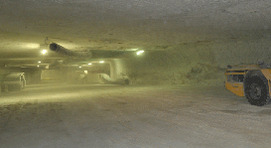
Rock salt formations can make suitable hosts for the disposal of high-level radioactive wastes. The performance of salt as a host rock for a repository over million-year timescales has been investigated for the potential site for a geological repository at Gorleben in Germany. The main threat towards the stability of a natural salt barrier is its high solubility. Hence, prevention of water access into the waste emplacement area has to be ensured. Geological factors to be assessed in this context include diapirism, the formation of (future) glacial channels, the impact of loads and stresses imposed by glaciers, hydrocarbons, and the local hydrogeology. The disadvantages of salt are, however, outweighed by its beneficial properties: high thermal conductivity, good hydro-mechanical properties, and a tendency to creep and thus seal cracks. These characteristics make rock salt a very attractive candidate to host a geological repository for essentially all kinds of radioactive waste.

This content is for Registered members only. To subscribe, please
join one of our participating societies or contact the Editorial Team.

Login
Already a member? Log in here

Salt as a Host Rock for the Geological Repository for Nuclear Waste Read More »

The Russian Strategy of using Crystalline Rock as a Repository for Nuclear Waste

The first Russian underground repository for high- and intermediate-level radioactive waste (HLW and ILW, respectively) will be built in the crystalline Archean granite–gneisses at Yeniseisky (Krasnoyarsk region, Siberia). The geological and hydrogeological characteristics of this site are similar to those found in Forsmark (Sweden) and Olkiluoto (Finland). However, the Russian disposal strategy is different. HLW will be disposed in the form of an aluminophos­phate glass and ILW (with long-lived radionuclides) will be cemented. Preliminary research on all aspects of repository design (stability of waste forms, waste packages, and bentonite buffer; evaluation of the geologic barrier; and simulation of radionuclide transport by groundwater) will be performed at an on-site underground research laboratory.

This content is for Registered members only. To subscribe, please
join one of our participating societies or contact the Editorial Team.

Login
Already a member? Log in here

The Russian Strategy of using Crystalline Rock as a Repository for Nuclear Waste Read More »

Scroll to Top

December 2025 --The Variscan Orogeny in Europe – Understanding Supercontinent Formation

The Variscan orogen formed between 380 and 300 million years ago through several accretionary and collisional cycles, culminating with the construction of the Pangea supercontinent. This process occurred via sequential opening and closure of oceanic basins, synchronous detachment of Gondwana derived continental ribbons, and their outboard amalgamation onto the Laurussia margin. The Variscan orogen is rather unique compared with other orogenic belts on Earth: its overthickened and dominantly magmatic crust in the central belt, surprisingly minor mantle involvement in the magmatic and geodynamic processes, coherent and pulsed magmatism along the collision suture, and its complex accretionary history. Because its final product, Pangea, is the youngest and best-understood supercontinent on Earth, the Variscan orogeny offers clues for understanding the mechanisms of supercontinent formation.