Thematic Articles

Crystalline Rock as a Repository for Swedish Spent Nuclear Fuel

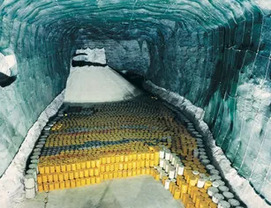
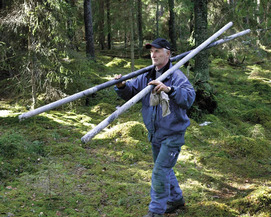
The granitic bedrock at Forsmark (Sweden) provides a well suited host rock for a geological repository in which to safely dispose of spent nuclear fuel. The properties of the host rock have been thoroughly investigated through boreholes from the surface. This repository will be at a depth of approximately 500 m where the spent nuclear fuel will be contained in 6,000 copper canisters able to withstand potential earthquakes and glaciation events. The canisters will be surrounded by a bentonite clay buffer to prevent canister corrosion by groundwater. The safety assessment in support of the site’s license application suggests that almost all of the canisters will remain tight even one million years into the future.

This content is for Registered members only. To subscribe, please
join one of our participating societies or contact the Editorial Team.

Login
Already a member? Log in here

Crystalline Rock as a Repository for Swedish Spent Nuclear Fuel Read More »
Geological Disposal of Radioactive Waste in Clay

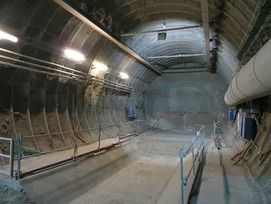
Keeping future generations safe from today’s nuclear waste relies on this waste being effectively isolated for all time. Clay rocks, or rocks with a high clay content, offer promising isolation properties over time periods that are as long as the age of their host geological formations. Constructing a repository in such material does not significantly change the clay’s isolation properties, which is a great advantage. Isolation is a function of the interplay between the slow release of radionuclides from the waste, the diffusion-controlled radionuclide migration, the establishment of a reducing geochemical environment, and the weak solubility and strong retention of the most toxic radionuclides on clay minerals and on additional engineered barrier materials.

This content is for Registered members only. To subscribe, please
join one of our participating societies or contact the Editorial Team.

Login
Already a member? Log in here

Geological Disposal of Radioactive Waste in Clay Read More »

Geological Disposal of Nuclear Waste: a Primer

The back-end of the nuclear fuel cycle has become the Achilles Heel of nuclear power. After more than 50 years of effort, there are, at present, no operating nuclear waste repositories for the spent nuclear fuel from commercial nuclear power plants or for the high-level waste from the reprocessing of spent fuel. The articles in this issue of Elements describe the status of geological disposal in salt, crystalline rock, clay, and tuff, as presently developed in five countries.

This content is for Registered members only. To subscribe, please
join one of our participating societies or contact the Editorial Team.

Login
Already a member? Log in here

Geological Disposal of Nuclear Waste: a Primer Read More »

Cosmic Dust Toolbox: Microanalytical Instruments and Methods

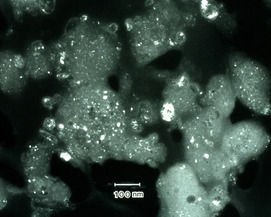
When cosmic dust particles were first identified almost 140 years ago, few would have predicted that much would ever be known about these miniscule objects, given the existing state of the art in analytical techniques. Times have changed. Today, in a single extraterrestrial dust particle, we can detect all the elements present, measure isotopic ratios, determine the exact crystalline structures of the minerals and the oxidation state of cations in those minerals, and even resolve individual atoms. The results are telling fascinating stories about the nature and histories of the particles that come to Earth. We review the most common techniques that help unravel these cosmic stories.

This content is for Registered members only. To subscribe, please
join one of our participating societies or contact the Editorial Team.

Login
Already a member? Log in here

Cosmic Dust Toolbox: Microanalytical Instruments and Methods Read More »

Geochemical Tracers of Extraterrestrial Matter in Sediments

Every year, tens of thousands of tons of cosmic dust accumulate at the Earth’s surface, representing a continuation of the accretion process that started 4.57 billion years ago. The unique geochemical properties of these materials, compared to the Earth’s surface, render them excellent tracers of Solar System, atmospheric, oceanographic, and geologic processes. These processes can be recovered from the records preserved in marine and terrestrial sediments, including snow and ice. We review evidence from these natural archives to illuminate temporal and spatial variations in the flux and composition of extraterrestrial material to Earth, as well as the terrestrial processes that affect the distribution of extraterrestrial tracers in sediments.

This content is for Registered members only. To subscribe, please
join one of our participating societies or contact the Editorial Team.

Login
Already a member? Log in here

Geochemical Tracers of Extraterrestrial Matter in Sediments Read More »

Organic Matter in Cosmic Dust

Organics are a significant component of most cosmic dust, as revealed from actual samples of extraterrestrial dust in the Earth’s stratosphere, in Antarctic ice and snow, in near-Earth orbit, and in asteroids and comets. Cosmic dust contains a diverse population of organic materials that owe their origins to a variety of chemical processes occurring in many different environments. The presence of isotopic enrichments of D and 15N suggests that many of these organic materials have an interstellar or protosolar heritage. The study of these samples is of considerable importance because they are the best preserved materials of the early Solar System available.

This content is for Registered members only. To subscribe, please
join one of our participating societies or contact the Editorial Team.

Login
Already a member? Log in here

Organic Matter in Cosmic Dust Read More »

Composition of Cosmic Dust: Sources and Implications for the Early Solar System

Many cosmic dust particles have escaped the aqueous and thermal processing, the gravitational compaction, and the impact shocks that often overprint the record, in most larger samples, of how Solar System materials formed. The least-altered types of cosmic dust can, therefore, act as probes into the conditions of the solar protoplanetary disk when the first solids formed. Analyses of these “primitive” particles indicate that the protoplanetary disk was well mixed, that it contained submicron grains formed in a diversity of environments, that these grains were aerodynamically transported prior to aggregation, which was likely aided by organic grain coatings, and that some minerals that condensed directly from the disk are not found in other materials. These protoplanetary aggregates are not represented in any type of meteorite or terrestrial rock. They can only be studied from cosmic dust.

This content is for Registered members only. To subscribe, please
join one of our participating societies or contact the Editorial Team.

Login
Already a member? Log in here

Composition of Cosmic Dust: Sources and Implications for the Early Solar System Read More »

Cosmic Dust: Finding a Needle in a Haystack

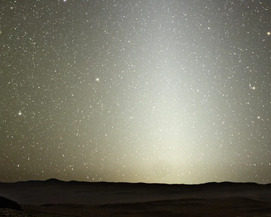
Collecting cosmic dust is a tricky business! Despite Earth’s surface being showered by thousands of tons of comic dust every year, such dust is quickly lost in a sea of terrestrial particles. Finding the tiny cosmic treasures requires collecting dust from the cleanest environments where the terrestrial particle background is low. The stratosphere can be sampled via high-flying aircraft, whereas sampling cosmic dust from polar regions and the deep sea requires techniques that concentrate the particles. Collection efforts are worth it. Cosmic dust derives from every dust-producing object in the Solar System, including ancient Solar System materials, possibly even interstellar materials, of a type not found in meteorites.

This content is for Registered members only. To subscribe, please
join one of our participating societies or contact the Editorial Team.

Login
Already a member? Log in here

Cosmic Dust: Finding a Needle in a Haystack Read More »

Cosmic Dust: Building Blocks of Planets Falling from the Sky

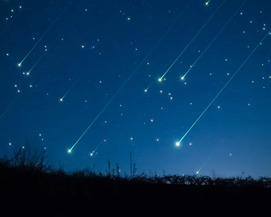
Throughout its history, Earth has accreted microscopic dust falling from space. Decelerating from cosmic speeds at the top of the atmosphere, the smallest particles can take weeks to reach the ground, failing a rate of 1 m−2 day−1. Although usually hidden among terrestrial materials, extraterrestrial particles can be collected from select environments and positively identified by their unique properties. Unmelted cosmic dust is often composed of large numbers of smaller silicate, sulfide, and organic components—the preserved materials from the early Solar System. Cosmic dust particles are samples of comets and asteroids and they are important samples of the initial materials that were to build the solid planets.

This content is for Registered members only. To subscribe, please
join one of our participating societies or contact the Editorial Team.

Login
Already a member? Log in here

Cosmic Dust: Building Blocks of Planets Falling from the Sky Read More »

Garnet: From Stone to Star

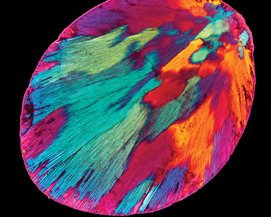
Garnet often occurs as naturally multifaceted, brightly colored, transparent, single crystals. These crystals represent chemically diverse solid solutions with a remarkable range of colors, which are largely controlled by the crystal chemistry of transition elements such as Fe, Mn, Ti, Cr, and V. These same optical properties have given garnet important cultural and historical relevance as a sought-after gemstone, from biblical times to the present day.

This content is for Registered members only. To subscribe, please
join one of our participating societies or contact the Editorial Team.

Login
Already a member? Log in here

Garnet: From Stone to Star Read More »

Scroll to Top

December 2025 --The Variscan Orogeny in Europe – Understanding Supercontinent Formation

The Variscan orogen formed between 380 and 300 million years ago through several accretionary and collisional cycles, culminating with the construction of the Pangea supercontinent. This process occurred via sequential opening and closure of oceanic basins, synchronous detachment of Gondwana derived continental ribbons, and their outboard amalgamation onto the Laurussia margin. The Variscan orogen is rather unique compared with other orogenic belts on Earth: its overthickened and dominantly magmatic crust in the central belt, surprisingly minor mantle involvement in the magmatic and geodynamic processes, coherent and pulsed magmatism along the collision suture, and its complex accretionary history. Because its final product, Pangea, is the youngest and best-understood supercontinent on Earth, the Variscan orogeny offers clues for understanding the mechanisms of supercontinent formation.