Thematic Articles

Formation and Exhumation of Ultrahigh-Pressure Terranes

The reigning paradigm for the formation and exhumation of continental ultrahigh-pressure (UHP) terranes is the subduction of crust to mantle depths and the return of crustal slices within the subduction channel— all at plate tectonic rates. Additional processes beyond the paradigm are needed to explain the diversity of geological observations gathered from the growing study of UHP terranes—for example, variations in the size, degree of deformation, petrologic evolution, timing of UHP metamorphism, and exhumation rates. Numerical models that evaluate physical parameters in time and space have produced new insights into the formation and exhumation of UHP terranes.

This content is for Registered members only. To subscribe, please
join one of our participating societies or contact the Editorial Team.

Login
Already a member? Log in here

Formation and Exhumation of Ultrahigh-Pressure Terranes Read More »
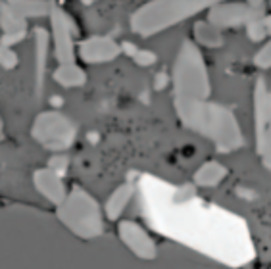
Deep Fluids in Subducted Continental Crust

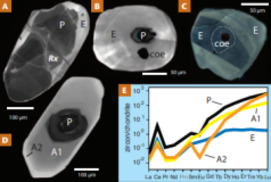
Establishing the timing and duration of ultrahigh-pressure metamorphism (UHP) for crustal rocks subducted to mantle depths of over 100 km requires high-precision geochronology directly coupled with pressure-sensitive indicators. The best links between UHP conditions and an age estimate are inclusions of the UHP indicator minerals coesite and/or diamond in datable zircon or garnet. Lu–Hf and Sm–Nd garnet ages define the prograde and peak portions of the pressure–temperature path for cold (<700 ºC), fast (>1 cm/y) UHP systems. UHP metamorphism in hotter (>800 ºC) and slower (<1 cm/y) terranes is best dated by U–Pb analysis of coesite-bearing zircon domains coupled with Sm–Nd and Lu–Hf garnet analysis.><1 cm/y) terranes is best dated by U–Pb analysis of coesite-bearing zircon domains coupled with Sm–Nd and Lu–Hf garnet analysis.

This content is for Registered members only. To subscribe, please
join one of our participating societies or contact the Editorial Team.

Login
Already a member? Log in here

Deep Fluids in Subducted Continental Crust Read More »

Linking Time to the Pressure–Temperature Path for Ultrahigh-Pressure Rocks

Establishing the timing and duration of ultrahigh-pressure metamorphism (UHP) for crustal rocks subducted to mantle depths of over 100 km requires high-precision geochronology directly coupled with pressure-sensitive indicators. The best links between UHP conditions and an age estimate are inclusions of the UHP indicator minerals coesite and/or diamond in datable zircon or garnet. Lu–Hf and Sm–Nd garnet ages define the prograde and peak portions of the pressure–temperature path for cold (<700 ºC), fast (>1 cm/y) UHP systems. UHP metamorphism in hotter (>800 ºC) and slower (<1 cm/y) terranes is best dated by U–Pb analysis of coesite-bearing zircon domains coupled with Sm–Nd and Lu–Hf garnet analysis.><1 cm/y) terranes is best dated by U–Pb analysis of coesite-bearing zircon domains coupled with Sm–Nd and Lu–Hf garnet analysis.

This content is for Registered members only. To subscribe, please
join one of our participating societies or contact the Editorial Team.

Login
Already a member? Log in here

Linking Time to the Pressure–Temperature Path for Ultrahigh-Pressure Rocks Read More »

Constructing the Pressure–Temperature Path of Ultrahigh-Pressure Rocks

Coesite and diamond in metamorphic rocks point to their very deep burial, but these minerals do not allow a precise derivation of metamorphic pressure–temperature (P–T) conditions at ultrahigh pressure (UHP). Thermodynamic calculations of mineral equilibria can accomplish this task when it is possible to assign mineral compositions to a former UHP equilibrium state. Pressure–temperature pseudosections are superior, because they often permit the construction of P–T paths to and from UHP conditions only on the basis of chemically zoned minerals such as garnet and phengite. The examples of a metapelite from Oman and an eclogite from the Erzgebirge, Germany, illustrate this method, but also demonstrate its limits. The derived paths are the basis for further geodynamic modeling and insight into tectonic processes.

This content is for Registered members only. To subscribe, please
join one of our participating societies or contact the Editorial Team.

Login
Already a member? Log in here

Constructing the Pressure–Temperature Path of Ultrahigh-Pressure Rocks Read More »

Continental Crust at Mantle Depths: Key Minerals and Microstructures

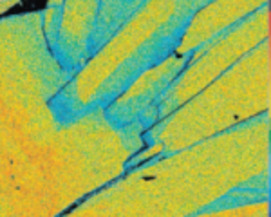
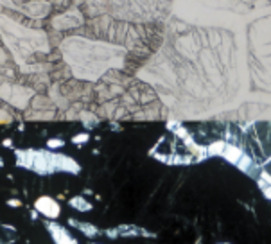
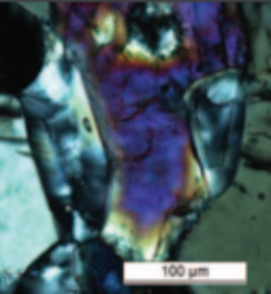
Finding evidence for ultrahigh-pressure (UHP) metamorphism in crustal rocks is far from straightforward. The index minerals coesite and diamond are incredibly inconspicuous and are therefore difficult to use as UHP prospecting tools. Consequently, petrographers rely on recognizing subtle breakdown microstructures that result from pressure release during the return to the surface of the once deeply buried rock. Similarly, many other UHP minerals are first suspected on the basis of typical reaction or exsolution microstructures. Thus, the painstaking use of microscopic techniques has been fundamental to the tremendous advances in characterizing, quantifying, and understanding macroscopic-scale, deep continental subduction, rapid exhumation, and mountain-building processes.

This content is for Registered members only. To subscribe, please
join one of our participating societies or contact the Editorial Team.

Login
Already a member? Log in here

Continental Crust at Mantle Depths: Key Minerals and Microstructures Read More »

The Realm of Ultrahigh Pressure Metamorphism

The discovery of diamond and coesite in crustal rocks is compelling evidence that continental material has experienced pressures that can only be achieved at mantle depths. At least 20 terranes of unequivocal continental crust containing diamond or coesite are now recognized around the globe; their study constitutes a new field in petrology called ultrahigh-pressure metamorphism. The idea that continents do not subduct has given way to the notion that Earth has been sufficiently cool since the Cryogenian (~850 Ma) to allow density changes to drive continental crust into the mantle during collision. Some of this crust is exhumed to the surface, some pools at the Moho, and the rest sinks into the mantle. In this issue, microscopic observations, phase-equilibrium modeling, geochronology, and geodynamic modeling track the journey of crustal rocks to the mantle and back to Earth’s surface.

This content is for Registered members only. To subscribe, please
join one of our participating societies or contact the Editorial Team.

Login
Already a member? Log in here

The Realm of Ultrahigh Pressure Metamorphism Read More »

Virtual Probes of Mineral–Water Interfaces: The More Flops, the Better!

New approaches are allowing computer simulations to be compared quantitatively with experimental results, and they are also raising new questions about reactivity at mineral–water interfaces. Molecular simulations not only help us to understand experimental observations, they can also be used to test hypotheses about the properties of geochemical systems. These new approaches include rigorous calibration of simulation models against thermodynamic properties and atomic structure. They also encompass rare event theory methods that allow simulation of slow, complex mineral surface reactions. Here, we give an overview of how these techniques have been applied to simulate mineral–water interface structure, growth/ dissolution mechanisms, and cluster formation.

This content is for Registered members only. To subscribe, please
join one of our participating societies or contact the Editorial Team.

Login
Already a member? Log in here

Virtual Probes of Mineral–Water Interfaces: The More Flops, the Better! Read More »

Control of Crystal Nucleation and Growth by Additives

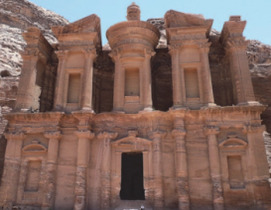
The survival of important pieces of our architectural and sculptural heritage is challenged by irreparable damage due to crystallization of soluble salts. Mineral precipitation is also a problem in many industrial processes, leading to costly scale formation. Most of the mechanisms that control these crystallization reactions can be modified or slowed down by using specific additives. Recent advances in elucidating the mechanisms of mineral nucleation and growth and molecular-level mineral–additive interactions have led to the development of novel treatments for the prevention of mineral scale and salt damage.

This content is for Registered members only. To subscribe, please
join one of our participating societies or contact the Editorial Team.

Login
Already a member? Log in here

Control of Crystal Nucleation and Growth by Additives Read More »

Environmental Remediation by Crystallization of Solid Solutions

Foreign ions can be incorporated into minerals during mineral growth and mineral–water interactions, resulting in solid phases with substitutional impurities in their structure. These “cocrystallization” processes control the mobility of minor elements in the environment and can be exploited as a remediation strategy to remove toxic metals from polluted waters and in the design of engineered barriers for the retention of metals, radionuclides, and other inorganic wastes generated by industry. The effectiveness of such remediation tools relies on thermodynamic and mechanistic factors that operate at different scales in space and time.

This content is for Registered members only. To subscribe, please
join one of our participating societies or contact the Editorial Team.

Login
Already a member? Log in here

Environmental Remediation by Crystallization of Solid Solutions Read More »

How Ions and Molecules Organize to Form Crystals

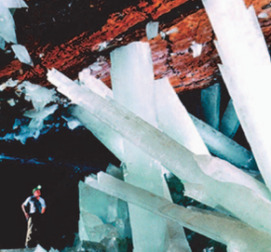
Humans have always been fascinated by natural crystals, with their wonderfully perfect shapes, colors, and sizes. The inspiration drawn from their delicate morphologies and sometimes incredible sizes has motivated an enthusiastic pursuit of knowledge to understand the formation of these natural wonders. A promising picture is emerging that is painted by brushes from two schools of thought. One treats crystallization as the successive attachment of individual ions or molecules, and the other as an aggregation of nanosized clusters, either in an ordered fashion or in an initially random arrangement followed by self-reorganization into a crystalline structure. The earlier model, the classical theory, is derived from equilibrium thermodynamics and the atomic structures of crystal surfaces. In contrast, the new, nonclassical model is observation-based, thanks to the advent of highresolution imaging techniques. Together, they represent our current state of knowledge as we work towards unraveling the secrets of crystallization.

This content is for Registered members only. To subscribe, please
join one of our participating societies or contact the Editorial Team.

Login
Already a member? Log in here

How Ions and Molecules Organize to Form Crystals Read More »

Scroll to Top

December 2025 --The Variscan Orogeny in Europe – Understanding Supercontinent Formation

The Variscan orogen formed between 380 and 300 million years ago through several accretionary and collisional cycles, culminating with the construction of the Pangea supercontinent. This process occurred via sequential opening and closure of oceanic basins, synchronous detachment of Gondwana derived continental ribbons, and their outboard amalgamation onto the Laurussia margin. The Variscan orogen is rather unique compared with other orogenic belts on Earth: its overthickened and dominantly magmatic crust in the central belt, surprisingly minor mantle involvement in the magmatic and geodynamic processes, coherent and pulsed magmatism along the collision suture, and its complex accretionary history. Because its final product, Pangea, is the youngest and best-understood supercontinent on Earth, the Variscan orogeny offers clues for understanding the mechanisms of supercontinent formation.