
Thematic Articles

Carbon-Based Nanoscience

Fullerenes, carbon nanotubes, and graphene are nanometer-sized forms of carbon with the properties of almost ideal low-dimensional systems. These systems have been at the center of exceptionally intense scientific interest. They have been considered not only as objects of fundamental research but also as components in a wide range of possible applications. In popular science, their names are synonymous with nanotechnology.

This content is for Registered members only. To subscribe, please
join one of our participating societies or contact the Editorial Team.

Login
Already a member? Log in here

Carbon-Based Nanoscience Read More »
Presolar Graphitic Carbon Spherules: Rocks from Stars

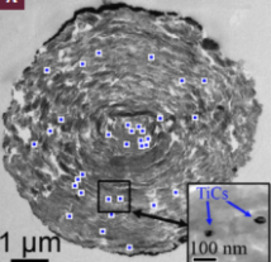
Graphitic carbon spherules found in primitive meteorites have large carbon isotope anomalies, indicating that they are carbonaceous stardust (also known as presolar grains) expelled from dying stars prior to the formation of the Sun. Presolar spherules show varying degrees of graphitization, ranging from poorly graphitic, turbostratic layers in low-density spherules to well-crystallized graphitic outer shells in high-density ones, and some spherules also contain a polycrystalline phase in their core. Within the spherules, grains of other refractory phases (including carbides and metals) are common, and these assemblages can be studied as one would study a rock. The isotopic and microstructural information available from these presolar graphitic assemblages gives insights into nucleosynthesis and grain condensation in late-stage carbon-rich stars.

This content is for Registered members only. To subscribe, please
join one of our participating societies or contact the Editorial Team.

Login
Already a member? Log in here

Presolar Graphitic Carbon Spherules: Rocks from Stars Read More »

Graphitic Carbons and Biosignatures

The unambiguous identification of graphitic carbons as remains of life in ancient rocks is challenging because fossilized biogenic molecules are inevitably altered and degraded during diagenesis and metamorphism of the host rocks. Yet, recent studies have highlighted the possible preservation of biosignatures carried by some of the oldest graphitic carbons. Laboratory simulations are increasingly being used to better constrain the transformations of organic molecules into graphitic carbons induced by sedimentation and burial processes. These recent research advances justify a reevaluation of the putative biogenicity of numerous ancient graphitic carbons, including the presumed oldest traces of life on Earth.

This content is for Registered members only. To subscribe, please
join one of our participating societies or contact the Editorial Team.

Login
Already a member? Log in here

Graphitic Carbons and Biosignatures Read More »

Hydrothermal Graphitic Carbon

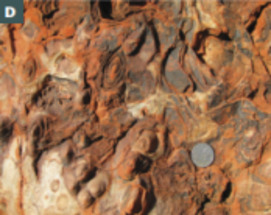
Graphitic carbon deposited from hydrothermal fluids occurs globally, in rocks from all depths in Earth’s crust and ranging in age from Precambrian to Tertiary. The varieties of deposits include graphitic cones and “artichokes” filling rock pores, explosively injected veins, graphitic pegmatites with platinum-bearing ores, and isochemical–“iso-isotopic” reactions of calcite + quartz to form graphite + wollastonite. In many deposits, carbon’s structure attains well-ordered, nearly perfect graphite crystallinity. The carbon isotope composition of hydrothermal graphitic material ranges widely, from that of biogenic organic debris to that of biogenic carbonate minerals, and overlaps the isotopic composition of mantle carbon as measured in diamonds.

This content is for Registered members only. To subscribe, please
join one of our participating societies or contact the Editorial Team.

Login
Already a member? Log in here

Hydrothermal Graphitic Carbon Read More »

From Organic Matter to Graphite: Graphitization

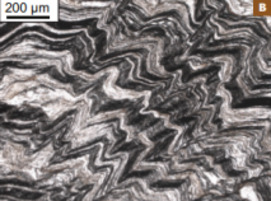
Organic compounds, which on Earth originate mainly through biological activity, are transformed under the physical conditions of Earth’s crust, with the end product being graphite. In this graphitization process, they pass progressively and irreversibly through a wide variety of intermediate macrostructures and nanostructures before finally attaining the stable graphite structure. Characterizing this rich array of carbon structures, which are also of industrial interest, provides valuable information on the geological processes affecting carbon-bearing rocks. These processes impact global energy supplies, the geophysical behavior of the crust, and the habitability of the surface environment.

This content is for Registered members only. To subscribe, please
join one of our participating societies or contact the Editorial Team.

Login
Already a member? Log in here

From Organic Matter to Graphite: Graphitization Read More »

Graphitic Carbon: A Ubiquitous, Diverse, and Useful Geomaterial

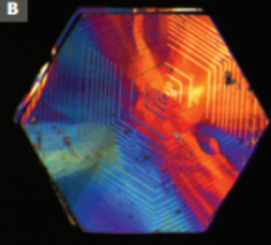
Graphitic carbon, with its diverse structures and unique properties, is everywhere at Earth’s surface. Strategically located at the interface between the lithosphere, biosphere, hydrosphere, and atmosphere, graphitic carbon constitutes a major terrestrial carbon reservoir. Natural and synthetic graphitic carbon is also used in a broad range of applications, and graphitic carbon, so widely varied in its physical properties, has proven to be adaptable to many uses in society. Graphitic carbon has played an important role in human history (for example, coal mining) and is now a building block of nanotechnology, but this remarkable material is also an active player in geological processes.

This content is for Registered members only. To subscribe, please
join one of our participating societies or contact the Editorial Team.

Login
Already a member? Log in here

Graphitic Carbon: A Ubiquitous, Diverse, and Useful Geomaterial Read More »

Cosmogenic Nuclides and Erosion at the Watershed Scale

Landscapes are sculpted by a variety of processes that weather and erode bedrock, converting it into soils and sediments that are moved downslope. Quantifying erosion rates provides important insights into a wide range of questions in disciplines from tectonics and landscape evolution to the impacts of land use. Cosmogenic nuclides contained in quartz sediment provide a robust tool for determining spatially averaged erosion rates across scales ranging from single hillslopes to continental river basins and are providing fundamental clues to how landscapes evolve. Cosmogenic nuclides in buried sediments contain unique information about paleo–erosion rates up to millions of years in the past. This article explores some of the basic ideas behind various methods used to infer catchment-wide erosion rates and highlights recent examples related to problems in tectonics, climate, and land use.

This content is for Registered members only. To subscribe, please
join one of our participating societies or contact the Editorial Team.

Login
Already a member? Log in here

Cosmogenic Nuclides and Erosion at the Watershed Scale Read More »

Tracing and Pacing Soil Across Slopes

The conversion of rock to soil prepares Earth’s surface for erosion by wind, water, gravity, and life. Together these agents wear down hills and mountains even as the land rises up under the stress of tectonic forces in the crust. Meanwhile, weathering liberates nutrients from minerals and disaggregates rock into regolith, generating hospitable substrates for life. Over the last two decades, geochemists, geomorphologists, and soil scientists have increasingly used cosmogenic nuclides to quantify how fast soils are made, modified, and finally swept away in hilly and mountainous landscapes around the world. These studies are revolutionizing our understanding of soils and their role in feedbacks that shape Earth’s surface, influence overlying ecosystems, and modulate climate over millions of years.

This content is for Registered members only. To subscribe, please
join one of our participating societies or contact the Editorial Team.

Login
Already a member? Log in here

Tracing and Pacing Soil Across Slopes Read More »

Cosmogenic Nuclide Dating of Earthquakes, Faults, and Toppled Blocks

When the recurrence intervals of large earthquakes span several thousands of years, the dating of fault movements over long time intervals is essential for estimating the next event. Constraining the age of faulting, earthquake recurrence, or toppled rocks is especially important for determining if a fault is likely to break again soon. In recent years, cosmogenic nuclides have provided new insights into the dating of these ground movements. Approaches to gathering this information can be direct, such as dating fault surfaces with 36Cl, or indirect, such as dating fault-offset alluvial fans with 10Be or 26Al. New results from these methods are certain to better define the tectonic and seismic hazards in areas with increasing population density.

This content is for Registered members only. To subscribe, please
join one of our participating societies or contact the Editorial Team.

Login
Already a member? Log in here

Cosmogenic Nuclide Dating of Earthquakes, Faults, and Toppled Blocks Read More »

Dating Disappearing Ice with Cosmogenic Nuclides

Cosmogenic nuclides are remarkably well suited to dating glacial landforms. Exposure dating of boulders on moraines and of glacially sculpted bedrock allows the determination of the ages of former ice margins, from which past glaciations can be temporally constrained. Where moraines are lacking or are poorly preserved, outwash is dated with depth profile dating. Two-nuclide methods can be used to determine the ages of buried till. Multinuclide measurements of bedrock ages also provide insights into periods of non-erosive ice coverage and can be used to identify regions with selective linear erosion. Of particular interest is the use of cosmogenic nuclides to assess rates of glacier retreat and glacial erosion.

This content is for Registered members only. To subscribe, please
join one of our participating societies or contact the Editorial Team.

Login
Already a member? Log in here

Dating Disappearing Ice with Cosmogenic Nuclides Read More »

Scroll to Top

December 2025 --The Variscan Orogeny in Europe – Understanding Supercontinent Formation

The Variscan orogen formed between 380 and 300 million years ago through several accretionary and collisional cycles, culminating with the construction of the Pangea supercontinent. This process occurred via sequential opening and closure of oceanic basins, synchronous detachment of Gondwana derived continental ribbons, and their outboard amalgamation onto the Laurussia margin. The Variscan orogen is rather unique compared with other orogenic belts on Earth: its overthickened and dominantly magmatic crust in the central belt, surprisingly minor mantle involvement in the magmatic and geodynamic processes, coherent and pulsed magmatism along the collision suture, and its complex accretionary history. Because its final product, Pangea, is the youngest and best-understood supercontinent on Earth, the Variscan orogeny offers clues for understanding the mechanisms of supercontinent formation.