Thematic Articles

Magnetic Guidance in Multicellular Prokaryotes and Eukaryotes

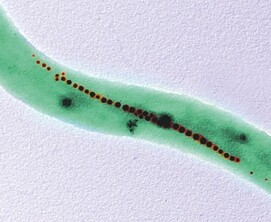
Some organisms have the unique capacity to geolocate and navigate in response to the Earth’s magnetic field lines. Migratory birds and fishes are the best-documented animals that evolved this capacity to guide their movements. In the microbial world, magnetotactic bacteria (MTB) and multicellular magnetotactic prokaryotes (MMPs) have been the only known magnetoreceptive microorganisms for decades. Some microeukaryotes also orient their motility axis along magnetic field lines thanks to the exploitation of MTB magnetism. The magnetic guidance of these prokaryotes and eukaryotes is due to the biomineralization of magnetic crystals. This article provides a brief overview of the current knowledge concerning the different multicellular prokaryotes and micro/macroeukaryotes capable of magnetoreception. We also discuss the evolution of this unique ability.

This content is for Registered members only. To subscribe, please
join one of our participating societies or contact the Editorial Team.

Login
Already a member? Log in here

Magnetic Guidance in Multicellular Prokaryotes and Eukaryotes Read More »
Environmental, Biomedical, and Industrial Applications of Biogenic Magnetite Nanoparticles

Magnetite is the most abundant magnetic iron mineral on the Earth’s surface. Its formation in natural ecosystems is mainly due to microbial activity. Microbially synthesized magnetite, commonly called “biogenic magnetite,” has many beneficial properties for a wide range of environmental and commercial applications. Its high surface reactivity facilitates interactions with (in)organic pollutants in anthropic and natural ecosystems, as well as with reagents in industrial catalysis. Due to its magnetic properties and good biocompatibility, biogenic magnetite is also well suited for biomedical applications such as cancer treatment or drug delivery. Biomineralization of magnetite offers an inexpensive and sustainable method for the production of this highly functional material. Moreover, this biomineralization process results in a biomolecule coating of the magnetite, making it highly amenable to further functionalization. This chapter reviews the application of biogenic magnetite across environmental, medical, and industrial settings. Existing challenges and future opportunities in these applications are also discussed.

This content is for Registered members only. To subscribe, please
join one of our participating societies or contact the Editorial Team.

Login
Already a member? Log in here

Environmental, Biomedical, and Industrial Applications of Biogenic Magnetite Nanoparticles Read More »

Impact of Biogenic Magnetite Formation and Transformation on Biogeochemical Cycles

Magnetite is a redox-active mineral that can form from both abiotic and biotic processes, and plays an active role in different biogeochemical cycles. Biogenic magnetite particles have properties that differ from their abiogenic counterparts in a variety of ways, including their size, chemical purity, magnetic properties, and association with biomass-derived organic matter. These properties directly influence magnetite reactivity—in particular its sorbent and redox behavior—affecting its association with metals, oxyanions, and other compounds in the environment. Biogenic (and abiogenic) magnetite particles are involved in redox processes by storing electrons, functioning as biogeobatteries, and by transferring electrons between microbial cells or between cells and inorganic constituents. Thus, magnetite influences the fate of contaminants and nutrients in the environment.

This content is for Registered members only. To subscribe, please
join one of our participating societies or contact the Editorial Team.

Login
Already a member? Log in here

Impact of Biogenic Magnetite Formation and Transformation on Biogeochemical Cycles Read More »

Magnetofossils: Relicts and Records of Deep Time and Space

Magnetofossils are magnetic nanoparticles that represent the fossil remains of microorganisms that biomineralize magnetic minerals in a genetically controlled manner. Most magnetofossils found in the geologic record are produced by magnetotactic bacteria, which use them for navigating within their living environment. Magnetofossils can be identified using a combination of magnetic and imaging techniques. A common attribute of magnetofossils, although not pervasive, is that they are arranged in chains, which determines their specific magnetic properties. Magnetofossil signatures have been reported from ancient rocks to modern sediments and even in extraterrestrial materials. They provide a window into biomineralization, past environments, and ancient magnetic fields, as well as supplying fuel for questions on the origin of life in the Solar System.

This content is for Registered members only. To subscribe, please
join one of our participating societies or contact the Editorial Team.

Login
Already a member? Log in here

Magnetofossils: Relicts and Records of Deep Time and Space Read More »

Biomagnetism: Insights Into Magnetic Minerals Produced by Microorganisms

Biomagnetism describes the biological origin of magnetism within living organisms. This phenomenon occurs due to the formation of iron-based minerals that exhibit magnetic ordering at room temperature. Perhaps the most studied form of biomagnetism originates in bacteria, especially magnetotactic bacteria that produce internal magnetite and greigite grains and iron-reducing bacteria that produce magnetite nanoparticles externally as a byproduct of iron respiration. These bacteria likely contribute to a significant proportion of environmental magnetite. The emergence of biomagnetism remains unclear, although it is thought that magnetotactic bacteria evolved this mechanism several billion years ago. Understanding how and why micro-organisms generate biomagnetism is helping to shed light on the origin of life on Earth and potentially on other planets. Biomagnetism is also of broad interest to industrial and environmental applications.

This content is for Registered members only. To subscribe, please
join one of our participating societies or contact the Editorial Team.

Login
Already a member? Log in here

Biomagnetism: Insights Into Magnetic Minerals Produced by Microorganisms Read More »

Asteroid Itokawa A Source of Ordinary Chondrites and A Laboratory for Surface Processes

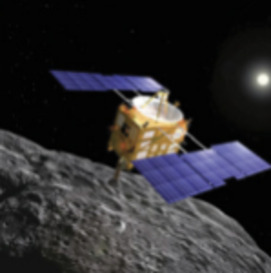
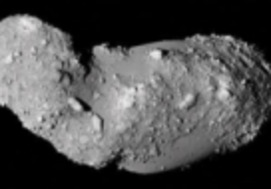
The Japanese spacecraft Hayabusa returned samples from the surface of an asteroid (near-Earth S-type asteroid 25143 Itokawa) for the first time in human history. This article describes the results of the initial analysis of the mineralogy, micropetrology, and elemental and isotopic compositions of regolith particles from Itokawa measuring 30–180 µm in diameter. The results show a direct link between ordinary chondrites and S-type asteroids. The regolith particles provide evidence of space-weathering rims and grain abrasion, and the information obtained has elucidated various processes on the airless surface of Itokawa, such as the impact of small objects, grain motion, and irradiation by solar wind.

This content is for Registered members only. To subscribe, please
join one of our participating societies or contact the Editorial Team.

Login
Already a member? Log in here

Asteroid Itokawa A Source of Ordinary Chondrites and A Laboratory for Surface Processes Read More »

Unique, Antique Vesta

Most asteroids are collisional rubble from eons past, and few of them have survived intact. Vesta, the second most massive asteroid, is the only differentiated, rocky body in this category. This asteroid provides a unique view of the kinds of planetesimals that accreted to form the terrestrial planets. We know more about this asteroid than any other, thanks to its recently completed exploration by the orbiting Dawn spacecraft and studies of the ~1000 meteorites derived from it. The synergy provided by in situ analyses and samples has allowed an unparalleled understanding of Vesta’s mineralogy, petrology, geochemistry, and geochronology.

This content is for Registered members only. To subscribe, please
join one of our participating societies or contact the Editorial Team.

Login
Already a member? Log in here

Unique, Antique Vesta Read More »

Asteroid 2008 TC3 and the Fall of Almahata Sitta, a Unique Meteorite Breccia

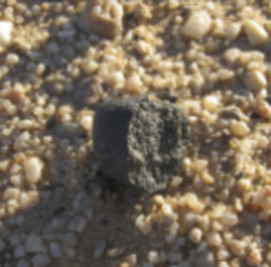
On October 6, 2008, the small (~4 m) asteroid 2008 TC3 was discovered and predicted to hit Earth within ~19 hours. Photometric data and a refl ectance spectrum were obtained. The asteroid fragmented at ~37 km altitude above Sudan. Approximately 700 centimeter-sized fragments were recovered and constitute the meteorite Almahata Sitta. It is a unique meteorite breccia, consisting of ~50–70% ureilitic materials, plus samples of nearly every major chondrite group. The refl ectance spectrum of 2008 TC3 is closest to that of F-class asteroids, not previously associated with any meteorite type. 2008 TC3/Almahata Sitta records a complex history of fragmentation, migration, and reaccretion of materials in the Solar System.

This content is for Registered members only. To subscribe, please
join one of our participating societies or contact the Editorial Team.

Login
Already a member? Log in here

Asteroid 2008 TC3 and the Fall of Almahata Sitta, a Unique Meteorite Breccia Read More »

Establishing Asteroid–Meteorite Links

Asteroids are arguably the most accessible remnants of building blocks of the early Solar System and an essential piece of the terrestrial planet–formation puzzle. Determining their compositions and physical properties can provide important and otherwise unobtainable information concerning the origin, structure, and dynamic history of the Solar System, as well as insights into the sources of materials from which the terrestrial planets were constructed. Our understanding of the compositional structure of the asteroid belt and of individual asteroids has advanced significantly since the 1970s. Strong associations between asteroids and meteorites are emerging thanks to multitechnique observations, the synthesis of observations and modeling, in situ measurements, and sample-return missions.

This content is for Registered members only. To subscribe, please
join one of our participating societies or contact the Editorial Team.

Login
Already a member? Log in here

Establishing Asteroid–Meteorite Links Read More »

Formation and Physical Properties of Asteroids

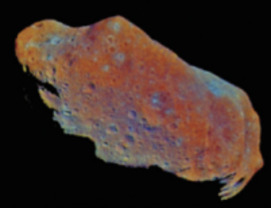
Asteroids are the leftover precursors to the terrestrial planets. Before the first images of them were sent from space, our knowledge of asteroids relied entirely on ground-based observations and meteorite analysis. Spacecraft images revolutionized our knowledge and geological understanding of their physical properties. They also showed us that asteroids are subjected to various kinds of processes and are incredibly diverse in size, shape, structure, composition, and rotational properties. Therefore, space missions remain necessary to enhance our knowledge of the various components of the asteroid population. In addition, numerical modeling is required to interpret spacecraft images and improve our understanding of the physical processes asteroids experience over their lifetime.

This content is for Registered members only. To subscribe, please
join one of our participating societies or contact the Editorial Team.

Login
Already a member? Log in here

Formation and Physical Properties of Asteroids Read More »

Scroll to Top

December 2025 --The Variscan Orogeny in Europe – Understanding Supercontinent Formation

The Variscan orogen formed between 380 and 300 million years ago through several accretionary and collisional cycles, culminating with the construction of the Pangea supercontinent. This process occurred via sequential opening and closure of oceanic basins, synchronous detachment of Gondwana derived continental ribbons, and their outboard amalgamation onto the Laurussia margin. The Variscan orogen is rather unique compared with other orogenic belts on Earth: its overthickened and dominantly magmatic crust in the central belt, surprisingly minor mantle involvement in the magmatic and geodynamic processes, coherent and pulsed magmatism along the collision suture, and its complex accretionary history. Because its final product, Pangea, is the youngest and best-understood supercontinent on Earth, the Variscan orogeny offers clues for understanding the mechanisms of supercontinent formation.