
Thematic Articles

Cosmogenic Nuclide Dating of Earthquakes, Faults, and Toppled Blocks

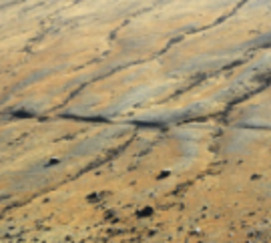
When the recurrence intervals of large earthquakes span several thousands of years, the dating of fault movements over long time intervals is essential for estimating the next event. Constraining the age of faulting, earthquake recurrence, or toppled rocks is especially important for determining if a fault is likely to break again soon. In recent years, cosmogenic nuclides have provided new insights into the dating of these ground movements. Approaches to gathering this information can be direct, such as dating fault surfaces with 36Cl, or indirect, such as dating fault-offset alluvial fans with 10Be or 26Al. New results from these methods are certain to better define the tectonic and seismic hazards in areas with increasing population density.

This content is for Registered members only. To subscribe, please
join one of our participating societies or contact the Editorial Team.

Login
Already a member? Log in here

Cosmogenic Nuclide Dating of Earthquakes, Faults, and Toppled Blocks Read More »

Dating Disappearing Ice with Cosmogenic Nuclides

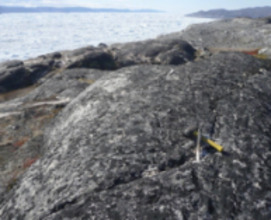
Cosmogenic nuclides are remarkably well suited to dating glacial landforms. Exposure dating of boulders on moraines and of glacially sculpted bedrock allows the determination of the ages of former ice margins, from which past glaciations can be temporally constrained. Where moraines are lacking or are poorly preserved, outwash is dated with depth profile dating. Two-nuclide methods can be used to determine the ages of buried till. Multinuclide measurements of bedrock ages also provide insights into periods of non-erosive ice coverage and can be used to identify regions with selective linear erosion. Of particular interest is the use of cosmogenic nuclides to assess rates of glacier retreat and glacial erosion.

This content is for Registered members only. To subscribe, please
join one of our participating societies or contact the Editorial Team.

Login
Already a member? Log in here

Dating Disappearing Ice with Cosmogenic Nuclides Read More »

The Nuts and Bolts of Cosmogenic Nuclide Production

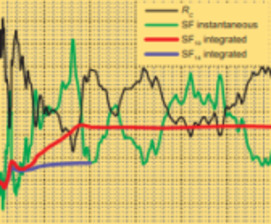
Over the last 60 years, our understanding of how cosmic rays produce cosmogenic nuclides has grown from basic physical considerations. We introduce the different types of cosmic ray particles and how their flux varies with altitude, latitude, and time. Accurately describing these variations remains a challenge for some regions when calculating production rates. We describe current and emerging computational methods for calculating production rates that address this challenge. Continuing developments in our understanding of modern and prehistoric cosmic ray fluxes and energy spectra in Earth’s atmosphere and at its surface are bound to contribute in the future to more robust applications.

This content is for Registered members only. To subscribe, please
join one of our participating societies or contact the Editorial Team.

Login
Already a member? Log in here

The Nuts and Bolts of Cosmogenic Nuclide Production Read More »

Cosmogenic Nuclides: Dates and Rates of Earth-Surface Change

Cosmogenic nuclides are very rare isotopes that are produced when particles generated in supernovas in our galaxy hit the atmosphere and then the Earth’s surface. When the rocks and soils in this thin, ever-changing surface layer are bombarded by such cosmic radiation, the nuclide clock begins to tick, thus providing dates and rates of Earth-surface processes. The measurement of cosmogenic nuclides tells us when earthquakes created topography at faults, when changing climate led to the growth of glaciers, how fast rivers grind mountains down, and how fast rocks weather to soil and withdraw atmospheric CO2. The use of cosmogenic nuclides is currently revolutionizing our understanding of Earth-surface processes and has significant implications for many Earth science disciplines.

This content is for Registered members only. To subscribe, please
join one of our participating societies or contact the Editorial Team.

Login
Already a member? Log in here

Cosmogenic Nuclides: Dates and Rates of Earth-Surface Change Read More »

Abiotic Gas: Atypical, But Not Rare

Abiotic gaseous hydrocarbons comprise a fascinating, but poorly understood, group of Earth fluids generated by magmatic and gas–water– rock reactions that do not directly involve organic matter. At least nine different inorganic mechanisms, including Fischer-Tropsch type reactions, occur over a wide range of temperatures. Trace amounts (typically parts per million by volume) are formed in volcanic and geothermal fluids, but considerable amounts of methane, reaching 80–90 vol%, are now recognized in an increasing number of sites in Precambrian crystalline shields and serpentinized ultramafic rocks. Surface manifestations of abiotic gas related to serpentinization release gas directly to the atmosphere in ways that are similar to seepages of ordinary biotic gas from petroliferous areas. Abiotic methane is more widespread than previously thought. It also likely exists in sites undergoing active serpentinization and may be present in petroleum systems in the vicinity of serpentinized rocks.

This content is for Registered members only. To subscribe, please
join one of our participating societies or contact the Editorial Team.

Login
Already a member? Log in here

Abiotic Gas: Atypical, But Not Rare Read More »

Fingerprinting “Stray” Formation Fluids Associated with Hydrocarbon Exploration and Production

Formation water or hydrocarbons occurring at surface and subsurface locations away from their point of origin are often referred to as “stray fluids.” Efforts to identify the sources of these fluids have provided important insights for optimizing hydrocarbon exploration and production. With the rapid growth in hydraulic fracturing operations, the source of associated fluids is becoming the focus of scientists and environmental regulators. Many geochemical techniques are available for fingerprinting stray fluids, but the information from traditional approaches can be difficult to interpret in some oil and natural gas settings. New isotopic techniques, using signatures of 18O, 2H, 13C, 87/86Sr, and others, are now placing better constraints on the interpretation of stray-fluid origins. These new isotopic fingerprinting methods are being used by the hydrocarbon industry to solve problems and safeguard public health.

This content is for Registered members only. To subscribe, please
join one of our participating societies or contact the Editorial Team.

Login
Already a member? Log in here

Fingerprinting “Stray” Formation Fluids Associated with Hydrocarbon Exploration and Production Read More »

Oil Sands and Heavy Oil: Origin and Exploitation

Oil sands are a mixture of “bitumen” (a very viscous, heavily biodegraded crude oil), unconsolidated sand, and water bound together by the bitumen and confining stresses. Economic incentives to produce reserves from the western Canada oil sands have driven geological and geochemical mapping to assess fluid quality controls and improve our understanding of the fundamental principles of the biodegradation of oils. While much of this activity has been for practical application, researchers have also had the opportunity to make fundamental advances in our understanding of subsurface biogeochemical processes and the boundaries of life in Earth’s crust. Indeed, the huge size and shallow location of oil sands, coupled with the many thousands of wells drilled, mean that on a per cell basis, oil sands represent a most accessible portion of the deep biosphere. Perhaps the most exciting future for the oil sand resource is on the biological front rather than as an energy resource.

This content is for Registered members only. To subscribe, please
join one of our participating societies or contact the Editorial Team.

Login
Already a member? Log in here

Oil Sands and Heavy Oil: Origin and Exploitation Read More »

From Source Rock to Reservoir: The Evolution of Self-Sourced Unconventional Resource Plays

From a geological perspective, the exploration of shale source rocks is relatively straightforward. Advances in stimulation technologies, such as hydraulic fracturing, have made it possible to economically extract hydrocarbons, both liquid and gas, from their respective source rocks. However, the devil is in the details when it comes to “sweet spotting” which shale reservoirs are going to be the best producers. Organic-rich shales are fi ne grained and tend to be petrophysically challenging and mineralogically and geochemically heterogeneous on the nanoscale. The advent of focused ion beam – scanning electron microscopic (FIB-SEM) techniques now allows us to image the pore networks in the organic matter that generated the hydrocarbons we produce. Two types of pore networks exist in organic-rich shales. One type is water wetting and is associated with the inorganic component of the shale, mostly clays. The other pore network is hydrocarbon wetting and is associated with the porosity that develops in organic matter during maturation and hydrocarbon generation.

This content is for Registered members only. To subscribe, please
join one of our participating societies or contact the Editorial Team.

Login
Already a member? Log in here

From Source Rock to Reservoir: The Evolution of Self-Sourced Unconventional Resource Plays Read More »

Dash for Gas, 21st-Century Style!

Since the price deregulation in natural gas was enacted in the 1990s, there has been roughly one “dash for gas” every decade. These dashes for gas have influenced the globalization of the gas industry while being uniquely North American and European phenomena. The first two involved increasing demands from the power sectors in Europe and the United States which were chasing what appeared to be dwindling supplies. The current dash for gas is fundamentally different and is driven by flush supplies in North America chasing multiple new markets. The nature of the current dash for gas has more potential to induce a globalized market for natural gas than did the previous episodes.

This content is for Registered members only. To subscribe, please
join one of our participating societies or contact the Editorial Team.

Login
Already a member? Log in here

Dash for Gas, 21st-Century Style! Read More »

Unconventional Hydrocarbon Resources: Prospects and Problems

The global energy landscape has changed significantly in the last few years as a result of technological advances in the recovery of unconventional hydrocarbon resources such as tight oil and shale gas. Studies have been initiated to assess the impacts of extraction and production of unconventional hydrocarbons on surface water, groundwater, and local air quality. There is additional concern over how their extraction and utilization on a global scale may contribute to atmospheric chemistry and global climate change. This article provides an overview of opportunities and challenges offered by the abundance of unconventional hydrocarbons, the driving forces that encourage our rush to employ them, and the need for Earth scientists to engage in studies of their properties and impacts on the environment. A fundamental understanding of geological, mineralogical, and geochemical processes is integral to how we responsibly extract and utilize these resources.

This content is for Registered members only. To subscribe, please
join one of our participating societies or contact the Editorial Team.

Login
Already a member? Log in here

Unconventional Hydrocarbon Resources: Prospects and Problems Read More »

Scroll to Top

December 2025 --The Variscan Orogeny in Europe – Understanding Supercontinent Formation

The Variscan orogen formed between 380 and 300 million years ago through several accretionary and collisional cycles, culminating with the construction of the Pangea supercontinent. This process occurred via sequential opening and closure of oceanic basins, synchronous detachment of Gondwana derived continental ribbons, and their outboard amalgamation onto the Laurussia margin. The Variscan orogen is rather unique compared with other orogenic belts on Earth: its overthickened and dominantly magmatic crust in the central belt, surprisingly minor mantle involvement in the magmatic and geodynamic processes, coherent and pulsed magmatism along the collision suture, and its complex accretionary history. Because its final product, Pangea, is the youngest and best-understood supercontinent on Earth, the Variscan orogeny offers clues for understanding the mechanisms of supercontinent formation.