Thematic Articles

Geological Carbon Dioxide Sequestration

Akey means of reducing greenhouse gas emissions from fossil fuels is to separate and concentrate CO2 from large point sources and inject it underground. The injection process, so-called “geological carbon sequestration”, uses off-the-shelf technology from the hydrocarbon industry and can be deployed at a useful scale. Widespread deployment will require a greater understanding of processes that trap CO2 underground, improved means of monitoring the injection stream, and a small number of large-scale experiments in settings with the most important representative geology. If successful, geological sequestration could greatly reduce greenhouse gas emissions while we continue to benefit from fossil fuels until true alternatives emerge.

This content is for Registered members only. To subscribe, please
join one of our participating societies or contact the Editorial Team.

Login
Already a member? Log in here

Geological Carbon Dioxide Sequestration Read More »

Confronting the Climate–Energy Challenge

Combustion of coal, oil, and gas has raised the amount of carbon dioxide in the atmosphere to levels higher than they have been for millions of years. A brief review of the history of Earth’s climate puts the next hundred years in its natural context, suggesting that most predictions based on climate models may be underestimating the problem. Reducing risks of future climate change requires changes in existing energy systems. These changes will be in three areas: increasing energy efficiency, increasing the stock of non-fossil energy generation, and adopting technologies for capturing and storing carbon dioxide from fossil fuels.

This content is for Registered members only. To subscribe, please
join one of our participating societies or contact the Editorial Team.

Login
Already a member? Log in here

Confronting the Climate–Energy Challenge Read More »

Energy: The Issue of the 21st Century

Energy usage makes modern life possible. Without it we would have no communications, transportation, food, health, and many other services and products that we rely on daily. Energy issues are moving to the forefront in the 21st century because of constraints imposed by increasing energy needs, climate change, energy security, and the apparent decline of fossil fuel resources. The main challenge is how to provide more energy for more people worldwide while at the same time reducing greenhouse gas and pollution emissions and providing secure and plentiful energy supplies. There is no silver bullet, so a variety of energy resources and technologies will be required.

This content is for Registered members only. To subscribe, please
join one of our participating societies or contact the Editorial Team.

Login
Already a member? Log in here

Energy: The Issue of the 21st Century Read More »

Environmental and Biomedical Applications of Natural Metal Stable Isotope Variations

Metal stable isotopes are now being used to trace metal contaminants in the environment and as indicators of human systemic function where metals play a role. Stable isotope abundance variations provide information about metal sources and the processes affecting metals in complex natural systems, complementing information gained from surrogate tracers, such as metal abundance ratios or biochemical markers of metal metabolism. The science is still in its infancy, but the results of initial studies confirm that metal stable isotopes can provide a powerful tool for forensic and biomedical investigations.

This content is for Registered members only. To subscribe, please
join one of our participating societies or contact the Editorial Team.

Login
Already a member? Log in here

Environmental and Biomedical Applications of Natural Metal Stable Isotope Variations Read More »

Fractionation of Metal Stable Isotopes by Higher Plants

Higher plants induce chemical reactions in the rhizosphere, facilitating metal uptake by roots. Fractionation of the isotopes in nutrients such as calcium, iron, magnesium, and zinc produces a stable isotope composition in the plants that generally differs from that of the growth medium. Isotope fractionation also occurs during transport of the metals within most plants, but its extent depends on plant species and on the metal, in particular, on the metal’s redox state and what ligand it is bound to. The metal stable isotope variations observed in plants create an isotope signature of life at the Earth’s surface, contributing substantially to our understanding of metal cycling processes in the environment and in individual organisms.

This content is for Registered members only. To subscribe, please
join one of our participating societies or contact the Editorial Team.

Login
Already a member? Log in here

Fractionation of Metal Stable Isotopes by Higher Plants Read More »

Combining Metal Stable Isotope Fractionation Theory with Experiments

Theoretical, experimental, and empirical methods for estimating isotope fractionations often complement one another in precision and ease of application. In metal isotope systems, a combined approach to calibrating stable isotope fractionation shows great promise, but it is sometimes necessary to resolve significant disagreements between theoretical models and empirical data. Here we introduce some of the principles and techniques used to estimate metal isotope signatures in low-temperature environments, and we highlight potential sources of uncertainty and error. We also discuss strategies for integrating theoretical calculations with data from laboratory experiments and natural sample suites.

This content is for Registered members only. To subscribe, please
join one of our participating societies or contact the Editorial Team.

Login
Already a member? Log in here

Combining Metal Stable Isotope Fractionation Theory with Experiments Read More »

Marine Calcification: An Alkali Earth Metal Isotope Perspective

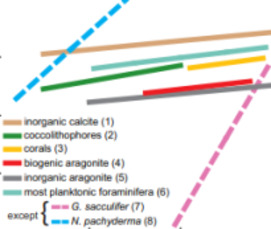
Calcium and magnesium isotope fractionation, recorded in shells of marine organisms that biomineralize calcium carbonate, is helping scientists to understand the transport of trace elements from seawater to the site of calcification, as well as trends in seawater composition throughout time. This knowledge would be difficult to obtain otherwise, and is important, especially now, for assessing the threat of ocean acidification to shell-producing marine organisms.

This content is for Registered members only. To subscribe, please
join one of our participating societies or contact the Editorial Team.

Login
Already a member? Log in here

Marine Calcification: An Alkali Earth Metal Isotope Perspective Read More »

Reconstructing Paleoredox Conditions through a Multitracer Approach: The Key to the Past Is the Present

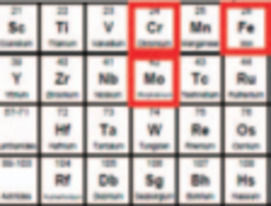
Knowledge about paleoredox conditions is essential for reconstructing how the oxygenation of the Earth’s surface environment has changed through time and affected the evolution of life on our planet. Some metal stable isotope systems, such as Mo isotopes, record the extent of ocean oxygenation directly. Others, such as Fe isotopes, record redox conditions indirectly through their effects on biological processes that are sensitive to the presence of oxygen. Studies of modern analogs and experiments have improved our understanding of the processes responsible for the observed isotope trends and have helped to advance the use of these isotope tools for paleoredox reconstructions.

This content is for Registered members only. To subscribe, please
join one of our participating societies or contact the Editorial Team.

Login
Already a member? Log in here

Reconstructing Paleoredox Conditions through a Multitracer Approach: The Key to the Past Is the Present Read More »

The Odds and Evens of Mercury Isotopes: Applications of Mass-Dependent and Mass-Independent Isotope Fractionation

Mercury (Hg) is a redox-active trace metal that is viewed internationally as a priority pollutant. Research into Hg stable isotope biogeochemistry is rapidly providing new insight into the behavior of Hg. With the recent discovery that Hg can exhibit both mass-dependent (MDF) and mass-independent fractionation (MIF) (range of >6‰ for both), Hg isotopes are providing a valuable new tool for tracing this important toxin through the environment. MDF alone, which occurs during redox transformations, biological cycling, and volatilization of Hg, can be exploited to increase understanding of the processes that control Hg distribution and bioaccumulation. The addition of MIF signatures greatly increases the usefulness of Hg isotopes because MIF provides a unique fingerprint of specific chemical pathways, such as photochemical reduction.

This content is for Registered members only. To subscribe, please
join one of our participating societies or contact the Editorial Team.

Login
Already a member? Log in here

The Odds and Evens of Mercury Isotopes: Applications of Mass-Dependent and Mass-Independent Isotope Fractionation Read More »

Metal Stable Isotopes in Low-Temperature Systems: A Primer

Recent advances in mass spectrometry have allowed isotope scientists to precisely determine stable isotope variations in the metallic elements. Biologically influenced and truly inorganic isotope fractionation processes have been demonstrated over the mass range of metals. This Elements issue provides an overview of the application of metal stable isotopes to low-temperature systems, which extend across the borders of several science disciplines: geology, hydrology, biology, environmental science, and biomedicine. Information on instrumentation, fractionation processes, data-reporting terminology, and reference materials presented here will help the reader to better understand this rapidly evolving field.

This content is for Registered members only. To subscribe, please
join one of our participating societies or contact the Editorial Team.

Login
Already a member? Log in here

Metal Stable Isotopes in Low-Temperature Systems: A Primer Read More »

Scroll to Top

December 2025 --The Variscan Orogeny in Europe – Understanding Supercontinent Formation

The Variscan orogen formed between 380 and 300 million years ago through several accretionary and collisional cycles, culminating with the construction of the Pangea supercontinent. This process occurred via sequential opening and closure of oceanic basins, synchronous detachment of Gondwana derived continental ribbons, and their outboard amalgamation onto the Laurussia margin. The Variscan orogen is rather unique compared with other orogenic belts on Earth: its overthickened and dominantly magmatic crust in the central belt, surprisingly minor mantle involvement in the magmatic and geodynamic processes, coherent and pulsed magmatism along the collision suture, and its complex accretionary history. Because its final product, Pangea, is the youngest and best-understood supercontinent on Earth, the Variscan orogeny offers clues for understanding the mechanisms of supercontinent formation.