Thematic Articles

Abiotic Gas: Atypical, But Not Rare

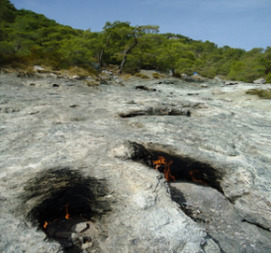
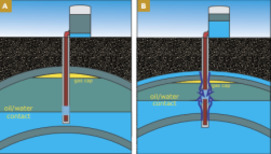
Abiotic gaseous hydrocarbons comprise a fascinating, but poorly understood, group of Earth fluids generated by magmatic and gas–water– rock reactions that do not directly involve organic matter. At least nine different inorganic mechanisms, including Fischer-Tropsch type reactions, occur over a wide range of temperatures. Trace amounts (typically parts per million by volume) are formed in volcanic and geothermal fluids, but considerable amounts of methane, reaching 80–90 vol%, are now recognized in an increasing number of sites in Precambrian crystalline shields and serpentinized ultramafic rocks. Surface manifestations of abiotic gas related to serpentinization release gas directly to the atmosphere in ways that are similar to seepages of ordinary biotic gas from petroliferous areas. Abiotic methane is more widespread than previously thought. It also likely exists in sites undergoing active serpentinization and may be present in petroleum systems in the vicinity of serpentinized rocks.

This content is for Registered members only. To subscribe, please
join one of our participating societies or contact the Editorial Team.

Login
Already a member? Log in here

Abiotic Gas: Atypical, But Not Rare Read More »
Fingerprinting “Stray” Formation Fluids Associated with Hydrocarbon Exploration and Production

Formation water or hydrocarbons occurring at surface and subsurface locations away from their point of origin are often referred to as “stray fluids.” Efforts to identify the sources of these fluids have provided important insights for optimizing hydrocarbon exploration and production. With the rapid growth in hydraulic fracturing operations, the source of associated fluids is becoming the focus of scientists and environmental regulators. Many geochemical techniques are available for fingerprinting stray fluids, but the information from traditional approaches can be difficult to interpret in some oil and natural gas settings. New isotopic techniques, using signatures of 18O, 2H, 13C, 87/86Sr, and others, are now placing better constraints on the interpretation of stray-fluid origins. These new isotopic fingerprinting methods are being used by the hydrocarbon industry to solve problems and safeguard public health.

This content is for Registered members only. To subscribe, please
join one of our participating societies or contact the Editorial Team.

Login
Already a member? Log in here

Fingerprinting “Stray” Formation Fluids Associated with Hydrocarbon Exploration and Production Read More »

Oil Sands and Heavy Oil: Origin and Exploitation

Oil sands are a mixture of “bitumen” (a very viscous, heavily biodegraded crude oil), unconsolidated sand, and water bound together by the bitumen and confining stresses. Economic incentives to produce reserves from the western Canada oil sands have driven geological and geochemical mapping to assess fluid quality controls and improve our understanding of the fundamental principles of the biodegradation of oils. While much of this activity has been for practical application, researchers have also had the opportunity to make fundamental advances in our understanding of subsurface biogeochemical processes and the boundaries of life in Earth’s crust. Indeed, the huge size and shallow location of oil sands, coupled with the many thousands of wells drilled, mean that on a per cell basis, oil sands represent a most accessible portion of the deep biosphere. Perhaps the most exciting future for the oil sand resource is on the biological front rather than as an energy resource.

This content is for Registered members only. To subscribe, please
join one of our participating societies or contact the Editorial Team.

Login
Already a member? Log in here

Oil Sands and Heavy Oil: Origin and Exploitation Read More »

From Source Rock to Reservoir: The Evolution of Self-Sourced Unconventional Resource Plays

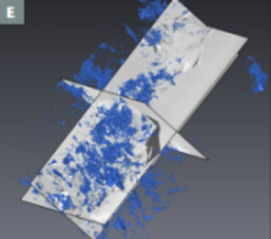
From a geological perspective, the exploration of shale source rocks is relatively straightforward. Advances in stimulation technologies, such as hydraulic fracturing, have made it possible to economically extract hydrocarbons, both liquid and gas, from their respective source rocks. However, the devil is in the details when it comes to “sweet spotting” which shale reservoirs are going to be the best producers. Organic-rich shales are fi ne grained and tend to be petrophysically challenging and mineralogically and geochemically heterogeneous on the nanoscale. The advent of focused ion beam – scanning electron microscopic (FIB-SEM) techniques now allows us to image the pore networks in the organic matter that generated the hydrocarbons we produce. Two types of pore networks exist in organic-rich shales. One type is water wetting and is associated with the inorganic component of the shale, mostly clays. The other pore network is hydrocarbon wetting and is associated with the porosity that develops in organic matter during maturation and hydrocarbon generation.

This content is for Registered members only. To subscribe, please
join one of our participating societies or contact the Editorial Team.

Login
Already a member? Log in here

From Source Rock to Reservoir: The Evolution of Self-Sourced Unconventional Resource Plays Read More »

Dash for Gas, 21st-Century Style!

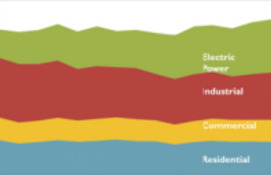
Since the price deregulation in natural gas was enacted in the 1990s, there has been roughly one “dash for gas” every decade. These dashes for gas have influenced the globalization of the gas industry while being uniquely North American and European phenomena. The first two involved increasing demands from the power sectors in Europe and the United States which were chasing what appeared to be dwindling supplies. The current dash for gas is fundamentally different and is driven by flush supplies in North America chasing multiple new markets. The nature of the current dash for gas has more potential to induce a globalized market for natural gas than did the previous episodes.

This content is for Registered members only. To subscribe, please
join one of our participating societies or contact the Editorial Team.

Login
Already a member? Log in here

Dash for Gas, 21st-Century Style! Read More »

Unconventional Hydrocarbon Resources: Prospects and Problems

The global energy landscape has changed significantly in the last few years as a result of technological advances in the recovery of unconventional hydrocarbon resources such as tight oil and shale gas. Studies have been initiated to assess the impacts of extraction and production of unconventional hydrocarbons on surface water, groundwater, and local air quality. There is additional concern over how their extraction and utilization on a global scale may contribute to atmospheric chemistry and global climate change. This article provides an overview of opportunities and challenges offered by the abundance of unconventional hydrocarbons, the driving forces that encourage our rush to employ them, and the need for Earth scientists to engage in studies of their properties and impacts on the environment. A fundamental understanding of geological, mineralogical, and geochemical processes is integral to how we responsibly extract and utilize these resources.

This content is for Registered members only. To subscribe, please
join one of our participating societies or contact the Editorial Team.

Login
Already a member? Log in here

Unconventional Hydrocarbon Resources: Prospects and Problems Read More »

Kaolins and Health: From First Grade to First Aid

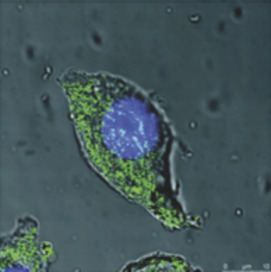
The use of kaolins in health has its origins in prehistoric times. Humans and other animals consume kaolin for gastrointestinal ailments, digestive enhancement, and possibly nutritional supplementation. Kaolins are effective as hemostatic wound dressings, because they can clot blood from traumatic injury, with little damage to tissue. Various forms of kaolin have been shown to be antibacterial, and increasingly kaolins are being utilized in drug delivery. While nanoparticles of kaolin can have deleterious effects on human tissues, modern understanding of the mineralogy of kaolins and their interactions with human cells allows many health applications, reaching far beyond the prehistoric “first aid” uses.

This content is for Registered members only. To subscribe, please
join one of our participating societies or contact the Editorial Team.

Login
Already a member? Log in here

Kaolins and Health: From First Grade to First Aid Read More »

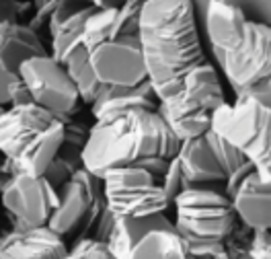
From Platy Kaolinite to Nanorolls

Kaolinite is one of the most important industrial clay minerals, with a worldwide consumption in the millions of tons per year and applications in a wide range of industrial areas. Traditionally, its most important use has been in the paper and ceramic industries. New, innovative techniques are being developed that are based on intercalation and grafting of kaolinite’s unique dipolar layer structure. Such techniques are leading the way to the synthesis of kaolinite–polymer nanocomposites, including bionanocomposites that might have value-added properties benefiting industry and the health sciences.

This content is for Registered members only. To subscribe, please
join one of our participating societies or contact the Editorial Team.

Login
Already a member? Log in here

From Platy Kaolinite to Nanorolls Read More »

Interactions of Kaolin Minerals in the Environment

The interactions of ions, organics, and microorganisms at the aqueous interface with kaolin-group minerals control many important geochemical processes in the environment. Kaolinite has both hydrophilic and relatively hydrophobic external surfaces that exhibit different adsorption phenomena. Our understanding of kaolin minerals in the environment is advancing as a result of molecular simulation and field studies. Molecular dynamics simulations reveal the structure and behavior of adsorbed ions and water molecules at the interface. The presence of microorganisms affects the formation and surfaces of kaolinite and halloysite. Mechanisms by which kaolin-group minerals complex, adsorb, and desorb radioactive pollutants in the subsurface can be understood by combining theory with observation.

This content is for Registered members only. To subscribe, please
join one of our participating societies or contact the Editorial Team.

Login
Already a member? Log in here

Interactions of Kaolin Minerals in the Environment Read More »

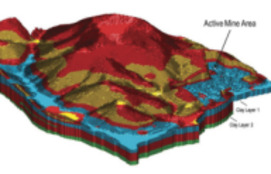
Mining and Processing Kaolin

Kaolin is used in many consumer products and as a functional additive and process enabler in manufacturing. It is typically extracted from open-pit mines that range from small to very large scale (tens to hundreds of thousands of dry metric tons produced per year). Ore processing consists of removing impurities, engineering particle size and shape, and enhancing certain properties through thermal and chemical treatment. In addition to the technical aspects of mining and processing, the social, environmental, and economic impacts of kaolin production are managed at each stage of the mining life cycle. Discussed herein are aspects of the history of kaolin mining, the classification of kaolin mines, the processing of kaolin, and the life cycle of mining.

This content is for Registered members only. To subscribe, please
join one of our participating societies or contact the Editorial Team.

Login
Already a member? Log in here

Mining and Processing Kaolin Read More »

Scroll to Top

December 2025 --The Variscan Orogeny in Europe – Understanding Supercontinent Formation

The Variscan orogen formed between 380 and 300 million years ago through several accretionary and collisional cycles, culminating with the construction of the Pangea supercontinent. This process occurred via sequential opening and closure of oceanic basins, synchronous detachment of Gondwana derived continental ribbons, and their outboard amalgamation onto the Laurussia margin. The Variscan orogen is rather unique compared with other orogenic belts on Earth: its overthickened and dominantly magmatic crust in the central belt, surprisingly minor mantle involvement in the magmatic and geodynamic processes, coherent and pulsed magmatism along the collision suture, and its complex accretionary history. Because its final product, Pangea, is the youngest and best-understood supercontinent on Earth, the Variscan orogeny offers clues for understanding the mechanisms of supercontinent formation.