

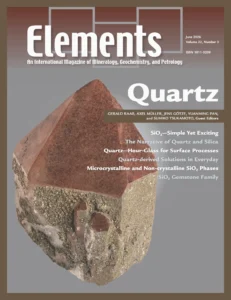
Quartz
Gerald Raab, Axel Müller, Jens Götze, Yuanming Pan, and Sumiko Tsukamoto– Guest Editors
Table of Contents
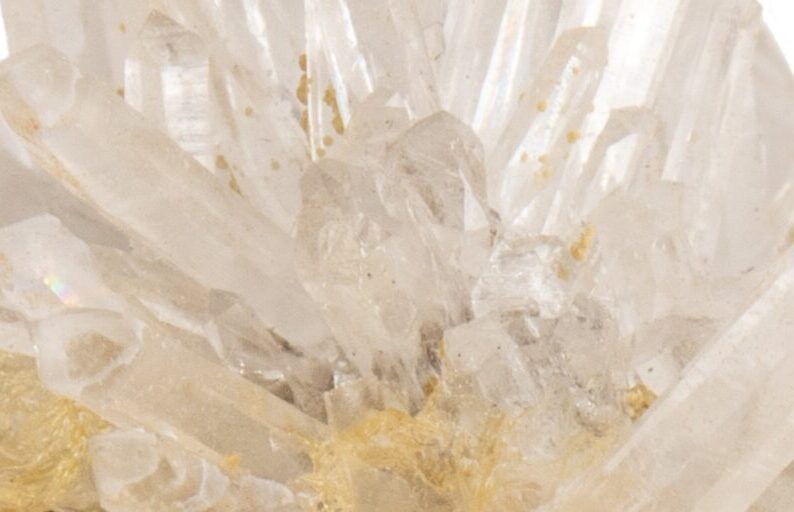
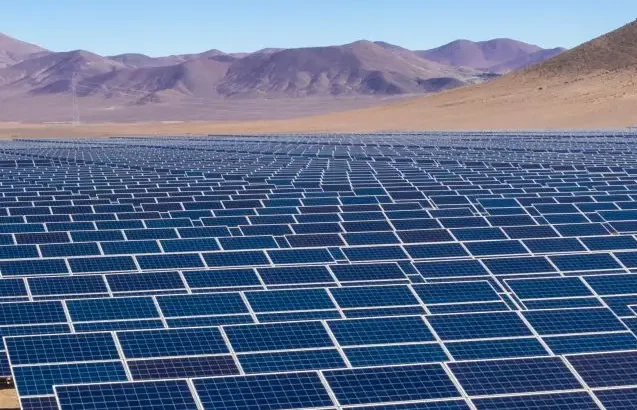
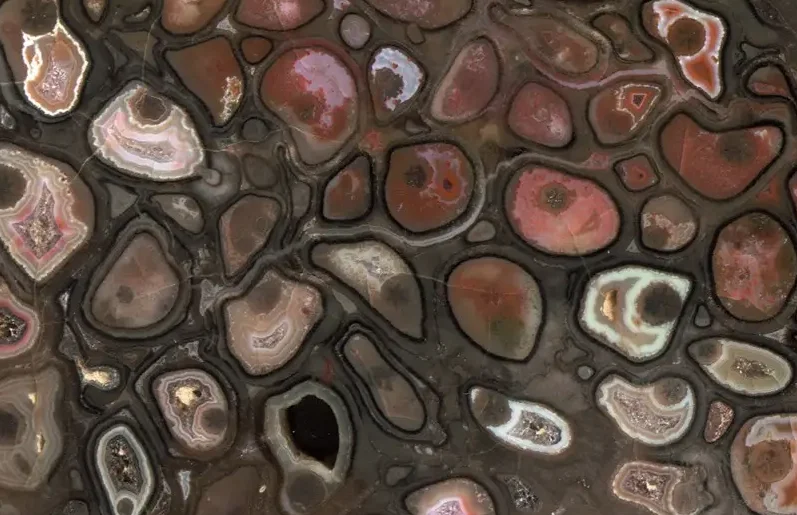
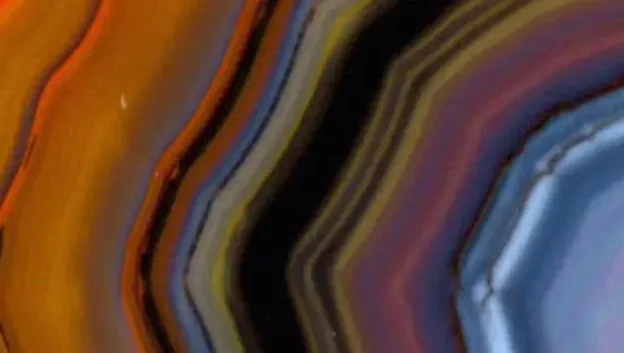
Silica (SiO2) is ubiquitous on Earth and has become integral to daily life. Although it has a simple chemical formula, the SiO2 system is very complex, with at least 15 known modifications, i.e., mineral phases with the same stoichiometric composition but different crystal structures. Quartz (trigonal, low-temperature α-quartz) is the most important silica polymorph in nature and occurs as a common constituent of magmatic, metamorphic, and sedimentary rocks. In modern industry, both single crystals and polycrystalline quartz materials are used, for example, as high-purity natural or synthetic quartz crystals, quartz sands, refractory materials, or as an ore for silicon metal crucial for photovoltaics, semiconductor, and steel production, and found in gyroscopes of satellites, special lenses, precision mirror substrates, and other high-tech equipment. This thematic issue of Elements provides a comprehensive overview of quartz occurrence and the silicate cycle, the role of quartz in the technological transformation of modern society, quartz and silica gemstones, and how quartz bears a wealth of genetic information that can serve as important mineralogical and geochemical indicators for geological and ore-forming processes.
- Quartz and SiO2—Simple Yet Exciting
- The Narrative of Quartz and Silica in the Earth and Other Planetary Bodies
- Quartz—Hour-Glass for Surface Processes
- Quartz-derived Solutions for Renewable Energy Production, Semiconductors, and Beyond
- Microcrystalline and Amorphous Silica: Materials that Shaped Humanity
- The SiO2 Gemstone Family
STROMALITIES AND OTHER MICROBIALITES
Guest Editors: Sebastian Viehmann (Leibniz University Hannover, Germany), Karim Benzerara (Sorbonne Université, France), and Simon Hohl (Tongji University, China)
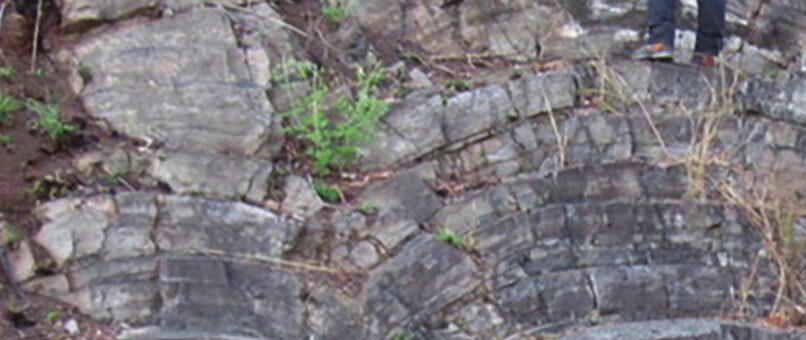
Stromatolites are remarkable bio-mineralizing structures that remain abundant on Earth today. Formed by microbial communities, these bio-sedimentary rocks provide a continuous record of microbial evolution over the last 3.5 billion years. They were first described 120 years ago by the German geologist Ernst Louis Kalkowsky and have recently gained extensive interest across the interdisciplinary fields of the bio-geosciences. Current research is advancing our ability to reconstruct ancient aqueous environments and their associated microbial communities, shedding light on their role in shaping bio-geochemical cycles. Moreover, stromatolites are recognized as possible targets in the search for extraterrestrial life within our Solar System. This issue reviews the latest advances in stromatolite research from a combined geobiology, mineralogy, and (isotope) geochemistry perspective. It also underscores the urgent need to protect these endangered microbial ecosystems on a fast-changing modern Earth.
- The Story of Stromatolites—Mineralising Ecosystems And Geo-Biological Archives
- Diversity, Mechanisms of Formation, and Predicted Fate of Modern Microbialites on a Rapidly Changing Planet
- Microbialite-associated Microbial Communities, Present and Past
- Stromatolites Through Earth’s Early History
- Exploring the Stable Isotope Record of Stromatolites
- Stromatolites as Recorders of Major Oxygenation Events and Biogeochemical Metal Cycling through Earth’s History
- Earth’s Carbon Cycle Thermostat: Beyond the Textbook Model (February 2026)
- Mineral Physics Applied to Earth and Planetary Sciences (April 2026)
- Quartz (June 2026)
- Stromatolites and Other Microbialites (August 2026)
- Zeolites (December 2026)
- Shaping Earth’s Habitability (December 2026)
Thematic Articles